
Flat roofs often start leaking at one weak spot: an open seam, a cracked pipe boot, or an area where water backs up around a clogged drain. If water is already dripping into your building, start with Outdo’s guide, All About Emergency Commercial Leak Repair. Once the immediate leak is under control, a permanent repair can address where the water is getting in.
Jeffersonville sits along the Ohio River. Hot summers, hard spring rains, and winter freeze-thaw cycles can all take a toll on seams and edges. That’s why commercial roof repair in Jeffersonville, IN, starts with tracing the leak. The spot where water drips inside may be some distance from where it entered the roof.
This guide covers what a repair can fix, how repair methods differ by roof type, and how finished work can be checked. To talk with Outdo Commercial Roofing, call 574-536-2823.
What Problems Can a Commercial Roof Repair Fix?
Many of these problems can be repaired in place when the surrounding roof is sound. Here’s what the warning signs look like and what can cause them:
- Punctures: Small holes or cuts, often near service paths and rooftop equipment. Dropped tools, debris, and hail can damage the membrane.
- Lifted seams: A visible gap or raised edge where two sheets overlap. Aging tape or adhesive, an incomplete weld, or movement can weaken the joint.
- Blisters: Raised bubbles that can form when air or moisture is trapped between roof layers.
- Cracks: Visible splits, often near folds, corners, or edges. Age, sunlight, and temperature changes can contribute.
- Loose wall flashing: A gap at the top of the flashing or sealant that has cracked or pulled away. Movement, aging sealant, and loose fasteners are possible causes.
- Failed sealant at penetrations: Cracked, shrunken, or missing sealant around pipes, vents, and rooftop units.
- Backed-out fasteners on single-ply roofs: A raised spot where a fastener pushes against the membrane, sometimes far enough to puncture it.
- Loose screws on metal roofs: Raised heads, cracked washers, or rust streaks. Repeated expansion and contraction can contribute.
- Possible wet areas: Soft spots or stains can point to trapped moisture, but further assessment is needed to confirm what’s wet.
Repair Methods That Match Your Roof Type
Each roof type needs a compatible repair. A patch that doesn’t bond to the existing roof can lift and leave another path for water.
First, Identify What Your Roof Is Made Of
Manufacturer markings, installation records, and warranty paperwork can help identify the roof system. If the layers are still unclear and the answer affects the repair, a roofer may recommend a small core sample.
TPO Roofs
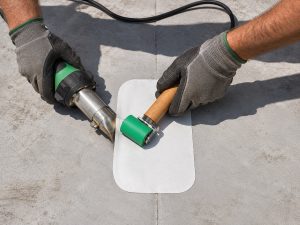
A compatible TPO patch can be heat-welded over the damaged area. Older, weathered TPO may need additional cleaning and preparation before welding.
PVC Roofs
PVC also uses heat-welded repairs, but a TPO patch is not a substitute for a compatible PVC patch. The existing surface needs to be prepared according to the membrane manufacturer’s instructions.
EPDM Rubber Roofs
EPDM repairs use compatible cleaners, primers, tapes, and patches. Dirt and old residue can interfere with the bond. The same compatibility concerns apply whether you need rubber roof repair in Evansville, IN, or are dealing with a damaged EPDM roof in Jeffersonville.
Modified Bitumen and Built-Up Roofs
These roofs are built in layers. A repair may involve removing damaged material and rebuilding the affected area with compatible layers. The method depends on the existing assembly and the conditions at the site.
Metal Roofs
A repair may involve replacing worn fasteners and sealing washers, resealing panel laps, or renewing seals around penetrations. The condition of the panel and fastener hole determines which replacement fastener fits. Rusted areas may need treatment before sealing.
Coated Roofs
A coating repair needs a clean surface and a product approved for the existing coating or roof material. Repair any damage underneath before applying the new coating.
Why Hardware-Store Tar Causes Trouble
General-purpose roof tar may be incompatible with single-ply membranes. Petroleum-based products can damage EPDM, and residue can interfere with a heat-welded patch on TPO or PVC. A roofer may need to remove the old patch material or affected membrane before making a compatible repair.
Drainage and Flashing Checks
When tracing a leak, look beyond the damaged spot. Failed flashing or a drainage problem elsewhere can send water under the roof surface. If substantial water is still standing about two days after rain, have the drainage checked and refer to the manufacturer’s requirements for your roof.
Drainage Checks and What Happens Next
- Leaves or dirt: Check drains, gutters, scuppers, and downspouts for blockages.
- Recurring ponding: Record where water collects. Depending on the cause, a cricket can guide water around equipment, or tapered insulation can create slope toward an outlet.
- Damaged drainage components: A cracked drain body, loose clamping ring, or broken downspout may need a separate repair.
Flashing Checks
- Check counterflashing and termination bars for gaps, loose fasteners, or failed sealant.
- Look for loose edge metal and cover strips that have lifted.
- Check pitch pans for gaps where the filler has shrunk or pulled away.
- Check pipe boots and clamps for cracks or looseness.
- Look for damaged flashing or sealant around vents, HVAC units, and skylights.
When a Spot Repair Is Not Enough
A spot repair makes sense when the damage is limited and the surrounding roof is sound. These conditions can call for a larger repair:
Widespread Wet Insulation
Repeated leaks, soft spots, and blisters can justify further investigation. A moisture survey can identify suspect areas, and sampling may help confirm what’s wet. A patch won’t dry trapped moisture, and affected insulation may need to be removed.
A Roof Near the End of Its Life
Leaks that keep appearing in new places can point to broader wear. Age, repair history, and the condition of the roof together help determine whether another patch is worthwhile.
A Soft or Damaged Deck
A soft spot may call for a closer look at the deck or insulation. If the deck is damaged, a surface patch won’t restore the support underneath.
When Repair Costs Add Up
If repairs are becoming frequent or expensive, compare their cost with a partial reroof or full replacement. Restoration or coating may also be worth considering if the existing roof is sound and moisture problems can be addressed first.
How Completed Work Is Checked
A repair isn’t done just because the patch is on. The checks should fit the roof system and the work performed:
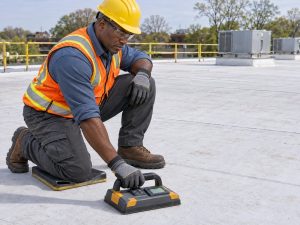
- Seams and patch edges: A trained roofer can probe cooled TPO or PVC welds for gaps using the manufacturer’s method. Other roof materials call for different checks.
- Drainage: If drainage contributed to the leak, check the water path near the repair and make sure work debris hasn’t blocked an outlet.
- Cleanup and records: Confirm how removed materials will be handled and whether the job includes dated photos, repair locations, or written follow-up notes.
If the source is difficult to isolate, a controlled water test may be appropriate when conditions allow. An interior check may also help when the space below the repair is accessible.
Get Commercial Roof Repair in Jeffersonville IN
A cracked pipe boot or lifted seam can let water reach the insulation. Addressing the cause early can help limit the damage. Outdo Commercial Roofing offers commercial roof maintenance and repairs. Call 574-536-2823 or contact us online to set up a roof inspection in Jeffersonville, IN.
Frequently Asked Questions
1. How much does commercial roof repair cost in Jeffersonville, IN?
Cost depends on the roof type, the extent of the damage, and how easy the area is to reach. A single patch usually takes less work than rebuilding flashing around several units. Ask for a quote once the repair scope is clear.
2. How long does a roof repair take?
A small patch can take less time than work involving wet insulation or several flashing details. Timing depends on the scope, access, and weather. Ask for a schedule after the roof has been assessed.
3. Can my business stay open during the repair?
It depends on the work and the building. Discuss business hours, access, noise, odors, and any areas that may need to be temporarily closed before the job is scheduled.
4. How do I know if I need a repair or a new roof?
A repair often makes sense when damage is localized and the surrounding roof is sound. Recurring leaks, widespread wet insulation, or deck damage may point to a larger repair or replacement. Coating is only an option when the underlying roof is suitable and moisture damage has been addressed.
5. How often should a commercial roof be inspected?
Spring and fall are good starting points, with another check after a major storm. Follow any inspection schedule specified in your roof warranty.
6. Will a repair affect my roof warranty?
It can. Some warranties specify repair materials, methods, or who may perform the work. Share the warranty with your roofer before work starts and confirm whether the manufacturer needs to be notified.