
Flat roof repair in Bloomington, IN, works best when it starts with the real cause of the leak. A drip inside the building may start several feet away at a loose seam, a cracked sealant joint, or a clogged drain.
Outdo Commercial Roofing repairs flat roofs on offices, warehouses, stores, and other commercial buildings across Indiana. The same principles apply whether you’re planning a repair in Bloomington or looking for flat roof repair in Evansville, IN: trace the leak, match the repair to the roof, and confirm how the finished work will be checked. Call 574-536-2823 to set up an inspection.
Common Flat Roof Defects: Causes and Signs
Each defect has its own warning signs. Here’s what a roofer may find:
- Punctures and tears: Dropped tools, foot traffic, and storm debris can leave small cuts or holes, often near HVAC units or service paths.
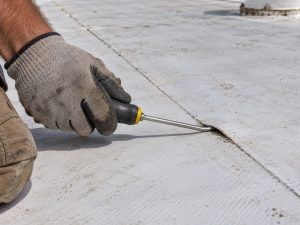
- Open seams: Temperature changes, movement, or a weak weld can leave a gap or lifted edge where sheets overlap.
- Blisters: Trapped air or moisture can cause a raised bubble. A blister alone does not tell you whether the insulation is wet.
- Cracks and splits: Aging and weather exposure can produce thin cracks near edges, corners, and seams.
- Loose flashing: Movement or a failed bond can cause flashing to pull away from a wall or curb.
- Backed-out fasteners: Look for raised screw heads on metal panels or fasteners pushing against the membrane from below.
- Failed sealant at penetrations: Shrinking or cracked sealant can leave gaps around pipes, vents, and pitch pans.
- Signs of ponding: Dirt rings or worn coating can mark areas where water repeatedly collects.
Repair Methods That Match Your Roof
How to Identify the Roof Before Repair
Using the wrong product can make a patch fail early. Manufacturer markings and past repair records can help identify the roof system. If the assembly is still unclear, a roofer may recommend a small core sample to examine the layers.
TPO Roofs
A damaged area can be repaired with a compatible TPO patch that is heat-welded in place. Older, weathered TPO may need extra cleaning and preparation before it can be welded.
PVC Roofs
PVC and TPO can look alike, but they aren’t interchangeable. A PVC repair calls for a compatible PVC patch and surface preparation suited to the existing membrane.
EPDM (Rubber) Roofs
EPDM repairs use compatible primers, seam tape, or cover strips as specified for the system. Products made for other roof materials may not bond properly to rubber.
Modified Bitumen and Built-Up Roofs
Damaged layers can be removed and rebuilt with compatible materials. The repair method depends on the existing assembly and the site conditions.
Metal Roofs
Repairs can include replacing worn fasteners, resealing panel laps, and renewing seals around penetrations. Rusted areas may need treatment before sealant is applied.
Coated Roofs
A coating needs a clean, compatible surface to bond. Confirm that the repair coating is approved for the existing coating or membrane, and address any underlying damage first.
Drainage and Flashing Checks
When tracing a leak, check drainage and flashing as well as the area directly above the drip. Water can travel beneath the roof surface before it appears indoors.
Drainage Checks
- Look for leaves and debris blocking drains, scuppers, or gutters.
- Check low areas where water collects. Substantial water still present about 48 hours after rain is a reason to investigate.
- Check that strainers are secure and that clamping rings are in good condition where used.
What to Do About Ponding
Photos and location notes help show where water collects after rain. Depending on the cause, a roofer may recommend tapered insulation or a cricket, a small sloped section that directs water around an obstruction. If the roof lacks enough drainage capacity, a drain upgrade may be needed.
Flashing Checks
- Inspect wall flashing and the metal counterflashing above it.
- Check seals around HVAC units, vents, pipes, and skylights.
- Look for gaps or shrinkage in pitch pan filler.
- Check edge metal for loose fasteners or gaps.
When the roof is otherwise sound, a compatible sealing system may help protect worn areas after repairs. Our guide to flat roof sealing in Evansville, IN explains how sealing can protect vulnerable details.
The Limits of a Localized Repair
A spot repair can work when the damage is limited and the surrounding roof is sound. It may not be enough when:
- Insulation is wet. A surface patch won’t dry insulation or restore its performance.
- Leaks keep appearing in new places. This may point to wider membrane or flashing problems.
- The roof is nearing the end of its service life. Age matters alongside installation quality, drainage, and maintenance.
- Damage is widespread. The extent of the damage and the condition of the roof help determine whether repair, restoration, or replacement makes sense.
When Moisture Scans and Core Samples Help
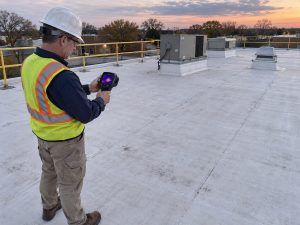
Recurring leaks, soft areas, or suspect blisters may warrant a closer look. A moisture survey can help identify areas that need investigation, and core samples can confirm what is present at the locations sampled. Those findings help define the scope of a repair or replacement.
How Completed Work Is Checked
Checks That Fit the Repair
- Seam probing: A trained roofer can probe cooled, heat-welded TPO or PVC seams and patch edges using the manufacturer’s method.
- Visual review: Check the repaired area for loose edges, wrinkles, or gaps.
- Drainage review: If standing water contributed to the leak, check the drainage path around the repair.
Added Checks When Needed
A controlled water test may help with a leak that is difficult to isolate, when the roof and site conditions allow it. If the leak only appears during certain storms, discuss whether a follow-up check after rain makes sense.
What to Keep for Your Records
Confirm what documentation comes with the job. Useful records include dated photos, the location and scope of each repair, and notes on nearby issues such as ponding or aging seams.
Why Bloomington Building Owners Choose Outdo
Outdo Commercial Roofing offers commercial roof maintenance and repairs, including leak detection and work on damaged membranes and drainage problems. If you have an active leak, Outdo also lists emergency service through its main phone number.
Schedule Flat Roof Repair in Bloomington, IN
If you see stains, drips, or open seams, schedule an inspection before the damage spreads. Call Outdo Commercial Roofing at 574-536-2823 or contact us online to discuss flat roof repair in Bloomington, IN. For an active leak, call the same number to ask about emergency service.
Frequently Asked Questions
How do I know if my flat roof needs repair?
Ceiling stains, drips during rain, or recurring standing water are reasons to arrange an inspection. A roofer can check for blisters, lifted seams, or flashing that has pulled away from a wall or curb.
What does a flat roof repair visit include?
The scope depends on the roof and the problem. A visit may involve tracing the leak, identifying the roof system, checking drains and flashing, and reviewing the finished repair. Ask which checks apply and what documentation is included.
How long does a flat roof repair take?
Timing depends on the size of the damage, the roof material, and the weather. A single patch is often quicker than work involving new flashing or several seams. Ask for a time estimate once the scope is clear.
Can a flat roof be repaired in winter?
Some repairs can be done in cold weather, but adhesives, primers, and coatings have application limits. If conditions prevent a permanent repair, ask whether temporary protection is suitable until the weather allows the full repair.
Is it cheaper to repair or replace a flat roof?
A localized repair usually costs less up front when the damage is small and the surrounding roof is sound. If wet insulation or repeated leaks affect a large area, compare the cost of continued repairs with restoration or replacement. Moisture testing can help determine how much of the roof is affected.
Why does my flat roof keep leaking after it was patched?
The patch may have missed the entry point, used an incompatible product, or left a drainage or flashing problem unresolved. A fresh assessment can help trace the water path and identify why the previous repair didn’t hold.