
A flat roof can look fine from the parking lot and still have damage you can’t see from the ground. Commercial roof inspections in New Albany, IN, help building owners understand the roof’s current condition and plan repairs before small defects spread. To book a visit, call Outdo Commercial Roofing at 574-536-2823.
A standard inspection focuses on visible and accessible areas. It can reveal surface damage, but it can’t confirm what’s hidden inside the roof layers. Whether you’re comparing commercial roof inspections in Evansville, IN, or planning a visit in New Albany, this guide explains what to look for in the inspection scope, what makes a report useful, and when separate testing may help.
What an Inspector Checks on Your Roof
The scope depends on the roof system, the purpose of the inspection, and which areas are accessible. A commercial roof inspection can include:
- Reviewing accessible roof sections, including areas away from the reported leak.
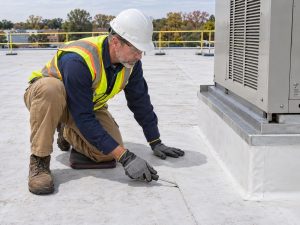
- Checking seams and laps for lifted edges or gaps. A trained inspector may probe compatible welded seams when appropriate.
- Looking for rust, loose fasteners, and missing pieces of metal trim.
- Checking flashing where the roof meets walls, curbs, and edges.
- Looking for cracked pipe boots and worn sealant around vents and rooftop equipment.
- Checking drains, scuppers, and gutters for clogs, damage, and debris.
- Looking at the roof deck or insulation where those layers are already exposed.
- Checking accessible interior ceilings for stains or drips when interior access is part of the visit.
- Taking overview photos and close-ups where photo documentation is included.
Common Defects and How to Spot Them
Here are some warning signs an inspector may find:
- Blisters: Raised bubbles or areas where the roof surface has lifted.
- Lifted or open seams: A visible gap or an edge that has separated from the sheet below.
- Cracked pipe boots: Splits or gaps where the boot meets the pipe.
- Loose or torn flashing: Flashing that has pulled away from a wall or curb or torn at a corner.
- Rusted or backed-out fasteners: Corroded heads or screws that sit above the surrounding surface.
- Punctures: Small holes or cuts near rooftop equipment and service paths.
- Clogged drains: Leaves, dirt, or debris blocking a drain strainer or scupper.
- Signs of ponding: Standing water, dirt rings, or stains where water has collected.
One visit shows where water is sitting at that moment. Dated observations after rain or a follow-up visit can help establish how long it stays. A soft spot is also an observation. It may warrant further investigation, but it doesn’t prove the insulation is wet.
Finding these signs early gives you time to address a defect before it spreads. For example, repairing an open seam can help keep water from reaching the insulation. If insulation is already wet, a surface repair alone won’t dry it out.
Your Inspection Report: Photos and Written Findings
A useful inspection report explains what was checked, where issues were found, and what should happen next. When arranging the inspection, confirm whether the scope includes:
- Dated overview photos and close-ups of defects.
- Location notes tied to recognizable landmarks, a roof sketch, or a map.
- Plain-language descriptions of the findings.
- Repair priorities, such as urgent, near-term, and monitor.
- Recommended next steps, including further assessment where the cause or extent of damage is unclear.
Use those priorities to decide what to address now, what to budget for, and what to recheck later. If separate testing is performed, the report should distinguish test results from visual observations so you can tell what each finding is based on.
What We See vs. What Needs Special Testing
Visual Observations
A standard inspection can document conditions that are visible or apparent during a roof walk, such as a lifted seam, a clogged drain, or a cracked pipe boot. Those observations may explain a problem or point to an area that needs closer investigation.
Tests That Need Separate Equipment or Access
These checks may require specialized tools, suitable weather, or access beyond a standard inspection:
- Infrared scans: A thermal camera detects surface temperature differences that can point to moisture below the membrane. Weather, surface conditions, and roof construction affect the results. A thermal pattern alone does not confirm wet insulation.
- Moisture meters: A meter can help assess selected spots. Readings need to be interpreted for the specific roof assembly.
- Core samples: A small section is removed to examine the layers at that location. The opening must be repaired afterward. Check any applicable warranty requirements before cutting cores.
- Electronic leak detection: This can locate breaches in compatible assemblies. Common methods rely on an electrically insulating membrane over a suitable conductive layer below it.
- Interior access: Tracing some leaks may require access above a ceiling or inside a locked room. Arrange access with the building manager or tenant before the visit.
If the surface findings point to a hidden problem, confirm what a proposed test can establish and whether it requires a separate visit.
How Test Results Guide Coating Decisions
A coating may be an option if the roof is sound and compatible with the proposed system. Moisture testing can help identify wet areas that need to be addressed first. A coating should not go over wet insulation or badly damaged sections. Read more about the advantages of commercial roof coating and ask whether moisture testing would help with your decision.
Planning Your Inspection with Outdo
When booking with Outdo Commercial Roofing, confirm the areas to be inspected and the documentation you need. Dated photos, locations for each finding, and repair priorities can make the report easier to use. If no repair is recommended, a note to that effect gives you a record to compare with the next visit.
Spring and fall are good times to schedule routine inspections. Consider an additional check after a major storm or hail, and follow any inspection schedule specified in your roof warranty.
Book Your Commercial Roof Inspection Today
An inspection report can help you budget repairs, compare changes over time, and share dated observations with an insurer, buyer, or tenant. Call Outdo Commercial Roofing at 574-536-2823 or contact us online to schedule a commercial roof inspection in New Albany, IN.
Frequently Asked Questions
1. How long does a commercial roof inspection take?
It depends on the roof size, rooftop equipment, and access. Specialized testing, such as an infrared scan, may require different conditions or a separate visit. Ask for an estimate based on the scope of your inspection.
2. Will I get photos of the problems you find?
Confirm whether photos are included when you schedule the visit. Dated close-ups paired with location notes make it easier to find defects again and compare their condition later.
3. What is the difference between an inspection and roof testing?
An inspection documents accessible conditions such as open seams, cracked flashing, or blocked drains. Separate tests can help investigate hidden moisture or locate a membrane breach, depending on the method and roof assembly.
4. Does a soft spot mean my insulation is wet?
Not necessarily. A soft spot can have more than one cause. Further assessment, which may include moisture testing or a core sample, can help determine what’s happening below the surface.
5. Can an inspection report help with an insurance claim?
A report with dated photos and written observations can document visible roof conditions for your records. You can share it with your insurer, which may request additional information.
6. Is my roof a good fit for a coating?
It may be if the existing roof is sound and compatible with the coating. An inspection and, where appropriate, moisture testing help identify conditions that need attention first. Wet insulation and damaged areas should be addressed before coating.