
Commercial roof restoration can extend the useful life of an existing roof without a full tear-off, but only when the roof is a sound candidate. The decision should start with documented conditions, not with the assumption that every aging roof can be coated. Outdo Commercial Roofing serves commercial properties across Southern Indiana and evaluates whether restoration, targeted repair, or replacement is the more appropriate next step. Call (574) 536-2823 to discuss the roof and its current condition.
Is the Roof a Sound Restoration Candidate?
Restoration generally makes the most sense when the existing roof assembly is serviceable, moisture concerns are limited and understood, the surface can accept the proposed system, and drainage problems are not being concealed by coating. A contractor should separate defects that can be repaired as part of restoration from conditions that make coating inappropriate.
| Condition | What to Verify | What It Means for Restoration |
|---|---|---|
| Moisture | Review leak history, interior signs, insulation concerns, and other evidence of trapped moisture. Use additional moisture testing when conditions call for it. | Saturated insulation or unresolved moisture must be addressed before restoration. Coating does not dry wet materials. |
| Adhesion | Confirm the existing surface can be cleaned and prepared so the proposed primer or coating can bond as required. | Contaminated, loose, or incompatible surfaces can cause premature failure unless corrected or removed. |
| Substrate condition | Check the membrane or metal surface, decking, fasteners, seams, flashing, and areas of deterioration. | Localized defects may be repairable, but rotten decking, severe deterioration, or structurally unsound areas require work beyond coating. |
| Drainage | Identify persistent ponding, blocked drainage, low areas, and whether runoff leaves the roof as intended. | Coating does not correct a ponding-water drainage defect. The drainage cause needs its own solution. |
| Compatibility | Verify that existing roofing materials, previous coatings, repair products, primer, and the proposed restoration system are compatible. | The selected system must suit the existing roof rather than be treated as a one-size-fits-all coating. |
For broader information about existing commercial roof systems, see Outdo Commercial Roofing’s commercial roofing solutions. If coating is being considered, the company’s roof coating services provide additional system context without replacing the candidacy evaluation.
From Inspection to Preparation
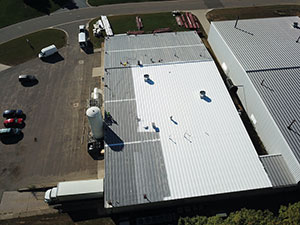
The process begins with an inspection that documents the roof’s condition, drainage, seams, flashing, penetrations, previous repairs, and signs of moisture. Where hidden moisture is suspected, additional evaluation can help determine whether insulation or other materials need removal before restoration. A related commercial roof inspection guide explains conditions that should be documented before major work is approved.
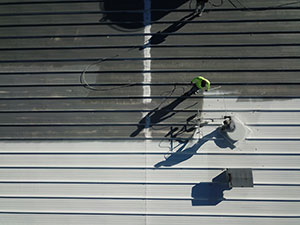
Once the roof is accepted as a restoration candidate, preparation should address the conditions identified during the inspection. The scope may include cleaning, removing loose or failed material, repairing seams or flashing, treating appropriate surface deterioration, replacing isolated damaged materials, and preparing the roof for the selected primer or coating. These steps should follow the requirements of the specific restoration system.
Application and Project Acceptance
The restoration product should be installed according to the selected system’s specifications, including required preparation, coverage, thickness, reinforcement, curing conditions, and detailing. The number of coats and the method used to verify completed work vary by system, so owners should ask what acceptance checks apply to the product being installed.
Closeout should confirm that agreed repairs are complete and that the restoration work meets the written scope. Depending on the system and project requirements, acceptance may include visual review, thickness checks, adhesion testing, photographs, manufacturer documentation, or other verification. Follow-up inspections can also be included when appropriate, but timing should match the actual system, warranty, and building needs.
When Coating Is Not the Right Fix
Restoration should not be used to cover conditions that need a different solution. Persistent ponding caused by drainage or slope defects, rotten decking, saturated insulation, structurally unsound areas, or widespread deterioration can require repair, partial replacement, or full replacement before coating is considered. The same is true when the existing surface cannot be prepared to accept a compatible restoration system.
This distinction protects the owner from paying for a surface treatment while an unresolved problem remains underneath. The goal is to identify roofs where restoration can reasonably preserve a serviceable assembly.
Qualifying the Benefits of Commercial Roof Restoration
When the roof is a good candidate, restoration can be less disruptive than a tear-off and may extend the service life of the existing system. Reflective coatings can reduce roof-surface heat gain and may affect cooling demand, but savings vary with the coating, roof design, insulation, climate, building use, and mechanical systems. There is no single lifespan extension or energy-savings figure that applies to every project.
Commercial Roof Restoration in Southern Indiana
Outdo Commercial Roofing evaluates commercial roofs across Southern Indiana for restoration, repair, and replacement. The useful starting point is an inspection that identifies moisture, substrate, drainage, adhesion, and compatibility conditions before coating is selected. Learn more about Outdo Commercial Roofing, or contact the team at (574) 536-2823 to discuss a commercial roof restoration project.
Frequently Asked Questions
How do I know if a commercial roof can be restored instead of replaced?
A sound candidate generally has a serviceable roof assembly, manageable repairs, no unresolved saturated insulation or rotten decking, acceptable drainage, and a surface compatible with the proposed system.
Can a roof coating fix ponding water?
No. Coating does not correct the drainage or slope condition causing persistent ponding, so that problem needs its own repair or design solution.
Does every restoration require a moisture scan or adhesion test?
Not necessarily. The contractor should use the evaluation and acceptance methods appropriate to the roof, suspected conditions, selected system, warranty, and project specifications.
Will roof restoration always reduce energy costs?
No. Reflective coatings may affect cooling demand, but actual savings depend on the complete roof assembly, coating, climate, building use, and mechanical systems.