

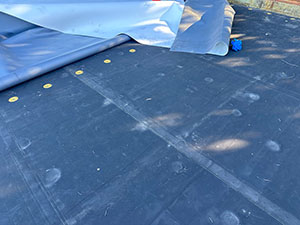
Commercial roof installation should be planned around the building, the selected roof system, site access, and field conditions rather than around the weather forecast alone. Before work begins, a Southern Indiana property owner should know what the contractor has confirmed about the existing deck, drainage, structural suitability, attachment, flashing, staging, inspection checkpoints, and warranty documents. Outdo Commercial Roofing provides commercial installation and replacement services and can be reached at (574) 536-2823 to discuss project planning.
Confirm Existing Conditions Before Installation
A new installation starts with understanding what the roof system will be attached to. The contractor should document the deck type, visible deterioration, moisture concerns, drainage conditions, roof geometry, penetrations, and any areas that still require investigation.
If the project involves an existing roof assembly, conditions hidden below the surface may affect the scope once work begins. The proposal should explain how damaged decking, wet insulation, or other concealed conditions will be documented and approved rather than assuming the substrate will be suitable everywhere.
Match the Roofing System to the Building
Material selection should account for the building’s use, substrate, drainage, roof configuration, rooftop traffic, insulation needs, and service access. Outdo Commercial Roofing currently offers single-ply systems, coatings, metal restoration, and full replacement services. Its commercial roofing overview provides context on the systems it installs and maintains.
The final specification should identify the roof system, insulation or cover board where applicable, attachment method, and key details rather than leaving major choices to be made after the crew arrives.
Use Weather as an Installation Constraint
Temperature, moisture, wind, and changing conditions can affect roofing work, but there is no single weather window that applies to every product or project. Adhesives, primers, membranes, coatings, sealants, and other materials have product-specific installation requirements that the contractor should follow.
Wet surfaces can interfere with some roofing processes, while wind can complicate material handling and placement. The installation plan should identify which weather conditions would pause or change the work and how exposed areas will be protected if conditions shift during the day.
Define Attachment and Flashing Details
The contractor should explain how the roofing system will be attached to the building and which details require special treatment. Mechanically attached and adhered assemblies have different requirements, and the appropriate approach depends on the deck, roof design, wind considerations, and selected system.
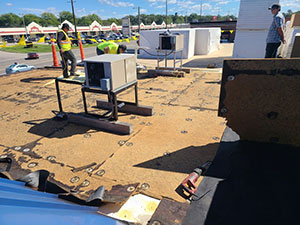
Flashing around curbs, penetrations, walls, drains, edges, and equipment should be part of the written scope. These details should not be treated as minor finishing work because they are part of the complete waterproofing assembly.
Plan Access, Staging, and Building Operations
Commercial installation can affect entrances, parking, deliveries, rooftop equipment, and daily business operations. Before work begins, identify material-staging areas, roof access, debris routes, crane or hoist needs where applicable, and any areas that must remain open for employees or customers.
The schedule should also explain how the crew will phase the work so the roof is not left unnecessarily exposed. For an occupied building, communication about access changes and weather-related schedule adjustments should be part of the project plan.
Set Inspection Checkpoints During the Work
Quality review should happen during installation, not only after the roof is finished. Checkpoints can include the prepared substrate before it is covered, insulation or cover-board placement, attachment, seams or laps where applicable, flashing, penetrations, drainage details, and perimeter work.
The exact checks depend on the roofing system and project specifications. The important point is that the owner and contractor know what will be reviewed before later work conceals it.
Separate Installation From Repair Diagnosis
Planning a new roof installation is different from diagnosing a leak or deciding whether an existing roof should be repaired, restored, or replaced. If an existing roof has active problems, those conditions should be evaluated first so the project is not scoped as a new installation without understanding what is already failing.
Outdo’s maintenance and repair information provides separate context for existing-roof problems. This page stays focused on the decisions that belong to an approved installation project.
Review Closeout and Warranty Documents
Before work starts, ask what documents will be provided at closeout. Depending on the project, that may include completed inspection records, photographs, approved change orders, material information, warranty documents, registration requirements, and maintenance instructions.
Do not assume a standard split between manufacturer and workmanship coverage. Ask which written warranty documents apply to the actual system, who is responsible for each type of covered issue, what exclusions or maintenance obligations apply, and what steps are required if a claim is made.
Commercial Roof Installation Planning
A successful installation plan connects the building’s existing conditions to the selected roof system, attachment and flashing details, site access, weather limits, inspection checkpoints, and closeout requirements. Outdo Commercial Roofing serves commercial properties within its current Indiana service area. Contact Outdo Commercial Roofing or call (574) 536-2823 to discuss a project.
Frequently Asked Questions
What should be confirmed before commercial roof installation begins?
Confirm existing conditions, substrate suitability, drainage, system selection, attachment, flashing, access, staging, weather limits, inspection checkpoints, and closeout requirements.
Does commercial roofing have one ideal installation season?
No. Installation limits depend on the product, system, field conditions, and manufacturer requirements, so the contractor should plan around the specific materials being used.
When should installation work be inspected?
Important conditions should be checked as work progresses, including the substrate, attachment, seams or laps, flashing, penetrations, drainage details, and perimeter work where applicable.
What should I ask about the roof warranty?
Ask which written warranty documents apply, what each one covers, what is excluded, what maintenance is required, and how a claim must be submitted.