

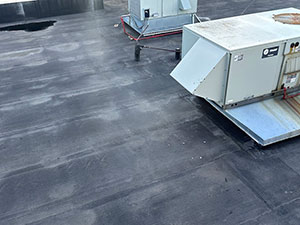
EPDM roofing has a long history on commercial low-slope buildings, but durability alone does not make it the right membrane for every property. Building owners should compare substrate condition, drainage, attachment method, insulation, rooftop activity, detailing, and future service access before selecting the system. Outdo Commercial Roofing installs single-ply roofing systems, including EPDM, for commercial properties in its current Indiana service area. Call (574) 536-2823 to discuss the roof assembly and project requirements.
Assess EPDM Roofing as a Complete Roof System
EPDM can be used in fully adhered, mechanically attached, and ballasted assemblies, but the building and roof deck need to support the selected approach. The contractor should explain why an attachment method fits the deck, wind requirements, roof geometry, insulation package, and access needs rather than recommending EPDM from membrane benefits alone.
| Suitability Factor | What the Owner Should Confirm |
|---|---|
| Existing substrate | Whether the deck and existing roof materials are dry, stable, compatible, and suitable for the proposed assembly. |
| Drainage | Whether drains, scuppers, slope, and low areas need correction before installation. |
| Attachment method | Why the project calls for an adhered, mechanically attached, or ballasted system. |
| Insulation and cover board | What thermal and protection layers are included and how they fit the roof design. |
| Rooftop activity | How service traffic, equipment access, dropped tools, or recurring maintenance work will be managed. |
| Details and penetrations | How curbs, walls, drains, pipes, edges, and transitions will be flashed with compatible EPDM materials. |
| Future service | Who will inspect or service the roof later and what membrane, seam, and flashing records will be available. |
Recover Suitability Needs Inspection Evidence
EPDM may be used in some recover projects, but installing new membrane over an existing roof is not automatically appropriate. The contractor should investigate moisture, insulation, deck condition, existing roof layers, attachment, drainage, and compatibility with the proposed assembly. Wet or deteriorated materials should not simply be concealed under a new system.
If the current roof cannot remain in place, the project may need partial or complete removal. Outdo’s commercial roof replacement overview provides context for removal, deck review, insulation, installation, and final inspection. Membrane selection should still be treated separately from the tear-off or recover decision.
Attachment Method Changes the Design
In a fully adhered assembly, the membrane is bonded to an approved substrate. Mechanically attached systems use fastening components tied to the roof deck. Ballasted systems hold a loose-laid membrane in place with approved stone or pavers. Because ballast adds substantial dead load, the roof structure and deck need to be suitable before that option is selected.
Attachment also affects future inspection and service. Ballast can make portions of the membrane less visible, while adhered and mechanically attached systems have different fastening, substrate, and wind-design considerations. No single attachment method is automatically best.
EPDM Seams and Repairs Use System-Specific Materials
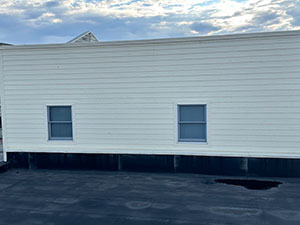
EPDM is a thermoset membrane, so field seams are typically completed with compatible primers and pressure-sensitive seam tape or adhesive products rather than the hot-air welded seams used with thermoplastic membranes such as TPO and PVC. That difference matters during installation and later service.
Ask how seams will be prepared, what products are specified at penetrations and transitions, and whether the installer also services EPDM or has a defined service plan. Future patches and flashing work should use materials and procedures compatible with the installed EPDM system.
Rooftop Activity Can Change Protection Requirements
Mechanical equipment, frequent HVAC service, solar work, and other rooftop traffic create different wear conditions than a roof that is rarely accessed. The contractor should identify travel paths and determine whether walk pads, cover-board choices, thicker or reinforced membrane options, or other protection measures belong in the design.
Performance depends on membrane construction, thickness, substrate support, traffic protection, and what happens on the roof after installation.
Reflective Benefits Depend on the EPDM Surface
EPDM is available in different surface colors. Traditional black EPDM absorbs more solar heat, while white or lighter reflective EPDM surfaces can reduce solar heat absorption. That does not guarantee lower utility bills because energy performance also depends on insulation, climate, HVAC efficiency, and building use.
If reflectivity matters, ask exactly which EPDM membrane or surface is being specified rather than assuming every EPDM roof has the same solar properties.
Durability Depends on the Whole Assembly
EPDM has extensive long-term field history, but service life is not determined by membrane chemistry alone. Drainage, seam preparation, flashing details, attachment, insulation condition, rooftop traffic, inspection, and timely service all affect the complete roof. The proposal should identify the actual system and maintenance or warranty requirements that apply to it.
If the existing assembly is no longer suitable to remain, Outdo also provides commercial roof replacement services. Replacement scope and membrane selection should be treated as related but separate decisions.
Is EPDM Roofing the Right Fit for Your Building?
EPDM can be a strong option when its attachment method, substrate, insulation, drainage, detailing, traffic protection, and service plan fit the building. The best decision is supported by the roof’s actual condition and a written system specification rather than headline claims about durability or energy savings. Contact Outdo Commercial Roofing at (574) 536-2823 to discuss single-ply options.
Frequently Asked Questions
Can EPDM be installed over an existing commercial roof?
Sometimes. The existing roof, insulation, deck, moisture condition, drainage, and proposed assembly all need to support a recover before it is selected instead of tear-off.
Are EPDM seams heat welded like TPO or PVC?
No. EPDM is a thermoset membrane, and field seams are generally completed with compatible primers and seam tape or adhesive systems rather than thermoplastic hot-air welding.
Does black EPDM provide the same reflective benefit as white EPDM?
No. Surface color affects solar heat absorption, so the owner should confirm the specified EPDM surface and evaluate energy performance with the rest of the building.
What should I ask about rooftop traffic before choosing EPDM?
Ask where technicians will travel, how equipment areas will be accessed, and whether the design needs walk pads, cover-board protection, reinforced or thicker membrane, or other measures.