

A flat roof needs regular care between inspections. Drains fill with leaves, sealant shrinks, and other trades can leave screws and scraps behind. Roof maintenance in Clarksville, IN, handles these issues on a schedule so small problems are less likely to turn into leaks and wet insulation.
This guide lists those tasks by roof type, roof part, and season. If you also manage buildings farther west, you can use the same checklist to plan roof maintenance in Evansville, IN, and adjust the schedule to each building.
To set up a maintenance plan, call Outdo Commercial Roofing at 574-536-2823.
Maintenance Starts Where the Inspection Ends
An inspection identifies problems and documents their condition. Maintenance is the work that follows: clearing drains, addressing minor defects, and tracking items that need another look. If you schedule a commercial roof inspection in Clarksville, ask which findings need attention now and which can wait until the next visit.
Upkeep Tasks by Roof Type
Each roof material needs its own care. Here’s what to look for when planning maintenance.
TPO Roofs
Clean the membrane using the roof manufacturer’s approved cleaner, tools, and method. Avoid pressure washing or harsh cleaners unless the manufacturer permits them. Leave seam probing to a trained roofer who knows how to check welds without damaging the membrane.
EPDM Roofs
EPDM is a rubber membrane with taped or bonded seams. A lifted seam may need cleaning, compatible primer, and EPDM seam tape, depending on its condition. Check for areas where the membrane has pulled away from walls or curbs.
PVC Roofs
On roofs near kitchen exhaust, check for grease around vents. Use a cleaner and method approved by the membrane manufacturer. If there is a grease containment system, follow its service schedule so it doesn’t overflow onto the roof.
Modified Bitumen Roofs
On granule-surfaced roofs, check for patches where the granules have worn away and exposed the asphalt. A roofer can determine whether a compatible coating or a localized repair is appropriate.
Metal Roofs
Look for loose fasteners, cracked sealing washers, movement at panel edges, and rust. Have damaged fasteners replaced and loose trim checked. Surface rust may need cleaning and a compatible primer before it spreads.
Coated Roofs
Check for thin coating or exposed substrate, especially near drains and along service paths. Recoating may be an option if the existing surface is sound and can be prepared to the coating manufacturer’s requirements.
Drain and Water Flow Tasks
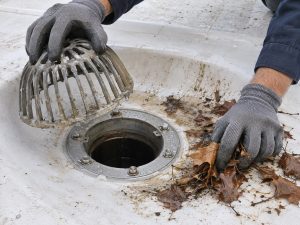
Heavy spring rain and fall leaves can put Clarksville roof drainage to the test. Include these tasks in the maintenance plan:
- Clear leaves, trash, and dirt from drains, gutters, and scuppers.
- Check that drain strainers are in place and secure.
- Have a roofer check clamping rings and bolts on drains that use them.
- Keep overflow scuppers open so they can carry water if a main drain is blocked.
- Check that downspouts flow freely and discharge where intended.
If substantial water remains about 48 hours after rain, have the drainage checked. Follow the requirements for your roof system and warranty. If the same spot repeatedly holds water, the solution may involve correcting a low spot with tapered insulation or changing the drainage layout.
Seam and Flashing Tasks
Seams join roof sheets together. Flashing seals the roof at walls, curbs, vents, and pipes. Check these areas during maintenance and make repairs based on what you find:
- Repair lifted seams using materials and methods compatible with the roof.
- Check pitch pans, which are small sealant-filled pockets around penetrations, for shrinkage or gaps. Renew failed sealant as the system requires.
- Check pipe boots for cracks or loose clamps. A split boot may need replacement.
- Check termination bars, the metal strips that secure the top of wall flashing, for loose fasteners or failed sealant.
- Check flashing around HVAC units, skylights, and exhaust fans for gaps or damage.
Cracked or separated sealant is a reason to take a closer look. The right repair depends on why the joint opened and what the roof manufacturer specifies.
Keep a Roof Service Record
A good record shows when the same problem keeps coming back and helps you plan repair costs. Check your warranty for maintenance and recordkeeping requirements. Your roof file should include:
- The date of each visit and who did the work
- Before and after photos of repairs, when available
- A roof map or location notes showing where repairs were made
- A list of items to watch at the next visit
- Warranty papers and the roof installation date
Keep everything in one shared folder so the history stays with the building when managers change.
When to Schedule Each Task
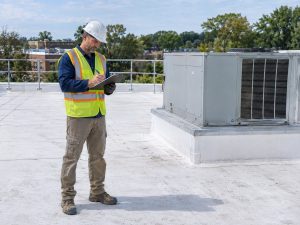
- Spring: Clear drains and check seams, flashing, and pitch pans for damage after winter.
- Fall: Remove leaves, check flashing and metal fasteners, and make sure overflow scuppers are open before winter.
- Winter: Watch for visible ice buildup or drainage problems from the ground. Leave roof access and clearing ice to trained personnel.
- After a major storm: Arrange a check for loose flashing, punctures, and debris once conditions allow.
- After other trades work on the roof: Have the work area checked for dropped screws, cuts, or new penetrations that need flashing.
- When repairs are identified: Prioritize open seams, damaged flashing, and blocked drains so water has less chance to reach the insulation.
If water is already coming inside, see Outdo’s guide, All About Emergency Commercial Leak Repair, for what to do first.
Set Up Roof Maintenance with Outdo
Outdo Commercial Roofing offers commercial roof maintenance and repair services. When setting up a plan, confirm which drain, seam, and flashing checks it covers and whether it includes dated photos, roof maps, or written repair notes.
Call 574-536-2823 or contact us online to schedule roof maintenance in Clarksville, IN.
Frequently Asked Questions
How often should a commercial roof in Clarksville, IN get maintenance?
Spring and fall are good starting points, with another check after a major storm. Roofs with frequent foot traffic, kitchen exhaust, or several rooftop units may need more attention. Follow the schedule in your roof warranty if it specifies one.
What tasks can my staff do between visits, and what needs a roofer?
Staff can record ceiling stains, note overflow they can see from the ground, and report when other trades have worked on the roof. Leave rooftop drain clearing, seam probing, flashing repairs, and clamping ring work to trained personnel.
How should a TPO or PVC roof be cleaned?
Follow the membrane manufacturer’s cleaning instructions. Use approved cleaners and tools, especially around kitchen exhaust where grease can build up. Avoid harsh chemicals and high-pressure washing unless the manufacturer allows them.
What do I get after each maintenance visit?
Confirm what documentation is included when you set up the plan. Useful records include the visit date, findings, repair notes, and anything to watch next time. Dated photos and location notes can help you track recurring problems.
Why do roof warranties ask for maintenance records?
Some warranties require regular care and documentation. Dated photos and repair notes help show what was checked and when. Read the terms for your roof so you know what to keep.
How does maintenance help a commercial roof last longer?
Clear drains give water a path off the roof. Addressing lifted seams, damaged flashing, and cracked pipe boots early helps keep water out of the insulation and roof deck, reducing the chance that a small repair turns into a larger one.