
Planning a roof coating in Jeffersonville, IN, starts with one question: is the existing roof a good candidate? A coating needs a sound, dry roof and a clean, compatible surface. When those conditions are met, a reflective coating can reduce heat absorbed by the roof, and restoring a sound roof can avoid the waste of a tear-off. Open seams and damaged flashing still need to be repaired first.
When comparing proposals, look for the roof condition findings, the repairs needed before coating, the specified system and thickness, and how thickness will be checked during application. Call Outdo Commercial Roofing at 574-536-2823 to schedule a roof check.
Which Roofs Can Be Coated?
Each roof type has its own cleaning and primer requirements. The coating manufacturer’s instructions determine which surfaces qualify and how they should be prepared.
Metal Roofs
Remove dirt, chalky residue, and loose rust. Repair loose fasteners and damaged laps, and apply a compatible rust-inhibiting primer where the system requires it. Widespread rust holes or an unsound deck can rule out coating.
Single-Ply Roofs: TPO, EPDM, and PVC
Use the cleaner, preparation method, and primer approved for the existing membrane and the selected coating system. For example, Conklin requires Affinity Primer under its Affinity Base Coat on TPO and EPDM and does not approve that primer for PVC.
Check for open seams, loose membrane, and attachment problems. Widespread seam failure or loose sheets may make coating unsuitable. A ballasted roof needs a separate suitability review before coating is considered.
Modified Bitumen
Remove dirt and loose granules. Some systems call for a primer to limit asphalt bleed-through. Widespread splits, lifted laps, or separated layers need attention before a coating is considered.
Built-Up Roofs
Remove loose surfacing as required and check that the coating is approved for the existing roof. Deep cracking, widespread blistering, or an incompatible coal tar surface can rule out coating.
How Moisture Is Checked
Wet insulation can lose performance and contribute to coating problems such as blistering or peeling. On a Jeffersonville roof, leaks can go unnoticed while water spreads below the surface. The condition underneath matters as much as how the roof looks from above.
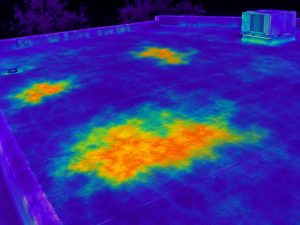
- Infrared scan: A thermal camera can identify temperature differences that may point to trapped moisture. Weather, roof construction, and surface conditions affect what the scan can show.
- Location notes or a roof map: Mark suspect areas so they can be checked again or compared with other readings.
- Confirmation: Moisture readings or core samples can help determine what is happening below the surface. A core shows conditions at the sampled location, and the opening must be repaired afterward.
There is no single cutoff for deciding whether to coat or replace a roof. Localized wet areas may be repairable. Widespread wet insulation, failing membrane, or deck damage can make replacement the better choice.
Repairs That Must Happen Before Coating
A coating protects a sound surface. Before it goes on, address problems such as:
- Open or weak seams
- Torn or loose flashing around walls, curbs, and vents
- Corroded or backed-out fasteners on metal roofs
- Cracks, splits, and blisters
- Wet insulation and other damaged materials
- Blocked drains or low spots that repeatedly hold water
Check the product’s standing-water limits and correct drainage problems where needed. That’s one reason selecting the best commercial roof coating depends on the roof’s condition and drainage as well as the price.
How the Roof Is Prepared
Remove dirt, residue, and loose material using an approved cleaning method. Let the roof dry as directed before applying primer or coating. If adhesion testing is called for, apply a test patch and check its bond after it cures, following the coating manufacturer’s instructions.
How the Coating System Is Applied
A coating system can include several layers. The exact sequence depends on the product:
- Detail work: Reinforce seams, fasteners, and flashing with compatible materials where specified.
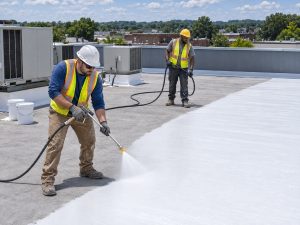
- Base coat: Apply the first full coat by spray or roller as directed, and let it cure before applying the next layer.
- Top coat: Apply the required coverage and build to the specified finished thickness.
- Thickness check: A wet-film gauge can check the applied thickness. One mil is one-thousandth of an inch. Follow the manufacturer’s requirements for wet and finished thickness.
Follow the product’s limits for temperature, humidity, dew point, and rain during curing. In Jeffersonville, plan the work around a forecast that gives the chosen system enough time to cure.
Product Warranty vs. Expected Service Life
A material warranty may cover defects in the coating itself. A system warranty may also cover certain leaks or labor costs. The written terms explain what is covered, what is excluded, and whether installer approval or regular maintenance is required.
Service life is how long the coating performs under actual conditions. It depends on surface preparation, coating thickness, sun exposure, drainage, foot traffic, and upkeep. A coating may last longer or wear out sooner than its warranty term suggests. When the roof underneath is still sound, a compatible recoat may extend its useful life.
Before approving a proposal, check who pays for labor, what maintenance is required, and what happens if water regularly collects on the roof.
Get Honest Roof Coating Advice in Jeffersonville
The advantages of commercial roof coating depend on the roof you already have. If it can be repaired and prepared for a compatible coating, restoration may be worth comparing with replacement. Call Outdo Commercial Roofing at 574-536-2823 or contact us online to schedule a roof check.
Frequently Asked Questions
1. How long does a commercial roof coating last?
Service life depends on the product, the roof underneath it, the thickness applied, drainage, and maintenance. The warranty term describes coverage. If the roof remains sound, recoating may extend its service life.
2. Can you coat a roof that leaks?
Sometimes, after the leaks are traced and repaired and any wet insulation or damaged materials are addressed. A coating by itself won’t correct failed flashing or dry out wet insulation.
3. What type of roof coating is best for flat roofs?
Match the coating to the existing surface and drainage. Some silicone systems are approved for conditions that some acrylic systems are not. Check the specific product’s standing-water limits and address recurring ponding before choosing a coating.
4. Is roof coating cheaper than a roof replacement?
It can cost less when most of the existing roof can stay in place. Compare proposals after accounting for moisture removal, repairs, surface preparation, and any drainage work.
5. When is the best time to coat a roof in Jeffersonville, IN?
Choose a dry weather window that meets the product’s application and curing limits. Check the roof surface temperature and the forecast before scheduling, since cool or humid conditions can extend cure time.
6. Does a roof coating warranty cover leaks?
Some system warranties cover specified leaks or labor. A material-only warranty typically covers product defects. Read the written terms for your system, including exclusions and maintenance requirements.