
A good roof coating can add years to a flat or low-slope roof without a full tear-off. But that only works when the job is done right. The coating has to go on a suitable roof, over dry insulation, after necessary repairs and careful cleaning. Skip a step, and the coating can peel, bubble, or trap moisture inside.
Understanding the full process before work begins helps building owners compare proposals. You can read about the advantages of commercial roof coating in our other guide. This one covers what happens before and during the job, so you know what a quality coating project looks like.
Why Roof Coating Matters in Bloomington, Indiana
Bloomington weather is hard on roofs. Summers are hot and humid. Winters bring snow, ice, and freeze-thaw cycles. Spring storms can dump heavy rain in a short time. These conditions stress seams, flashing, and the roof surface.
A coating adds a protective layer over a properly prepared roof. Compatible coating systems can shield the surface from UV exposure and weathering, but underlying defects must be repaired first. For suitable buildings, roof coating in Bloomington, IN can be a useful option between localized repairs and full replacement.
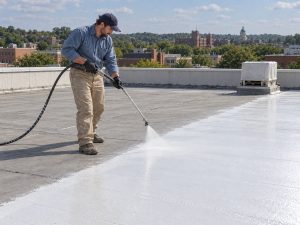
Which Roofs Can Be Coated?
Not every roof is a good fit. A coating works best when the roof below it is still sound and can support a reliable bond. Common roof types that may be suitable include:
- Metal roofs: Rust, damaged panels, seams, and fasteners must be addressed before applying a compatible coating system.
- Modified bitumen: May be suitable after cleaning, repairs, and any required priming to address adhesion or asphalt bleed-through.
- Built-up roofs (BUR): Gravel-surfaced systems need additional evaluation and preparation. Loose material must be removed, and the remaining substrate must meet the coating manufacturer’s requirements.
- Single-ply roofs (TPO, EPDM, PVC): Compatible systems are available, but surface preparation, primer requirements, and adhesion must be checked.
- Spray foam roofs: Foam roofs typically have a protective coating and may be recoated when the existing assembly remains suitable.
A roof that is badly damaged, has widespread wet insulation, or is pulling loose from the deck is not a good candidate for coating without more extensive work. A coating would not correct those underlying problems.
Step 1: Check for Hidden Moisture
Moisture evaluation is a critical step. Water can hide inside the roof before you see an interior leak. Coating over wet insulation can trap moisture and contribute to blisters, material deterioration, corrosion, and early failure.
Roofers use several methods to investigate suspected moisture:
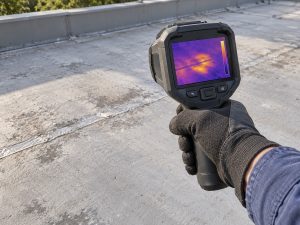
- Infrared scans: A thermal camera identifies temperature patterns that may indicate wet insulation. Suitable conditions are needed, and findings may require confirmation.
- Moisture meters: Appropriate meters help identify suspect areas, depending on the roof assembly and the instrument used.
- Core cuts: Targeted samples help confirm the condition of the roof layers and whether moisture is present. Sample openings must then be properly repaired.
Wet insulation and damaged roofing materials should be removed and replaced before coating. Widespread moisture may make replacement more appropriate than restoration.
Step 2: Make Repairs First
A coating is not a substitute for underlying repairs. It works best when the roof is already sound. Before coating, a roofer should address:
- Open seams and split laps
- Loose or backed-out fasteners on metal roofs
- Damaged blisters and soft spots
- Damaged flashing around walls, vents, and HVAC units
- Clogged drains and persistent drainage problems
Repairing these areas first gives the coating a sound base to bond to.
Step 3: Clean and Prepare the Surface
Coatings stick to properly prepared surfaces, not to dirt. Cleaning removes dust, algae, chalky residue, and debris using methods suitable for the existing roof. Some roofs need a manufacturer-approved cleaner. Metal roofs may need rust treatment and a compatible primer.
Adhesion testing helps confirm that the proposed preparation, primer, and coating will bond to the existing surface. A test patch is prepared, applied, cured, and evaluated according to the manufacturer’s procedure.
The roof must be dry before coating starts. In Bloomington, late spring through early fall may offer suitable application windows, but the actual temperature, humidity, dew, and rain forecast must meet the selected product’s requirements.
Step 4: Choose the Right Coating
Different coatings suit different conditions. Many silicone systems tolerate ponding water, although persistent ponding still needs a drainage assessment. Acrylic can be a cost-effective choice for roofs that drain well, while polyurethane coatings can offer strong abrasion resistance. Product requirements and compatibility matter in every case.
Our guide on selecting the best commercial roof coating explains how to match the coating to your roof type, budget, and goals.
Step 5: Apply the Coating System
A coating project involves more than applying a layer of paint. Depending on the selected system, application may include:
- Primer, if required: Prepares the substrate for the coating.
- Seam and detail work: Uses compatible sealant, mastic, reinforcement, or other specified materials at seams, edges, and penetrations.
- Base coat: An initial field coat where the system requires one.
- Top coat: A finish coat where specified, bringing the system to its required thickness.
Some products use a different application sequence or number of coats. The manufacturer’s instructions should guide the work.
Thickness matters. Coating thickness is measured in “mils,” or thousandths of an inch. Applying less than the specified amount can reduce performance and affect warranty eligibility. Wet film thickness checks and material-use records help verify application, while the finished system must meet the required dry film thickness.
Product Warranty vs. Real Service Life
Building owners often mix these two up.
What a Product Warranty Covers
A product warranty defines the manufacturer’s coverage for specified material defects, subject to its written terms. Some warranties cover replacement material only. Other system warranties may include labor or specified leak coverage, with conditions that can include approved installation, inspections, maintenance, and required coating thickness.
Coverage and duration vary by system. Always read what is and is not covered.
What Service Life Means
Service life is how long the coating actually performs on your roof. It depends on installation quality, thickness, weather, drainage, foot traffic, and maintenance. A coating may remain serviceable beyond its warranty period. It can also fail earlier if moisture, poor preparation, or damage is left unaddressed.
Many coating systems can be cleaned and recoated when they begin to wear, provided the existing coating and roof assembly remain suitable. Repairs or removal of failed areas may still be necessary.
Talk to a Roof Coating Expert
A roof coating is only as good as the roof beneath it and the work behind it. Moisture evaluation, necessary repairs, surface preparation, and a compatible coating system should all be part of the project plan.
If you are thinking about roof coating in Bloomington, IN, contact Outdo Commercial Roofing at 574-536-2823 to discuss your building, available services, and the next step.
Frequently Asked Questions
How long does a commercial roof coating last?
There is no single number. Service life depends on the coating type, installed thickness, preparation, drainage, weather exposure, and maintenance. The specified system’s manufacturer guidance provides a better basis for planning than a general lifespan estimate. Warranty length is a separate figure.
Is a coating warranty the same as how long the coating will last?
No. A warranty defines coverage and conditions for a stated period. Service life is how long the coating actually performs on your roof. A well-installed, maintained coating may outlast its warranty, while poor preparation or unresolved moisture can cause early failure.
Can you put a roof coating over a leaking roof?
The leak source must be identified and repaired first. Wet insulation and damaged materials should be replaced before coating. Applying a coating without addressing the underlying leak can leave moisture trapped and allow deterioration to continue.
What is the best time of year for roof coating in Indiana?
Late spring through early fall often provides suitable weather windows. However, application and curing depend on actual roof temperature, humidity, dew, and the rain forecast. The selected coating’s requirements determine when work can proceed.
Is roof coating cheaper than a roof replacement?
Coating a suitable roof often costs less than full replacement because it can avoid extensive tear-off and disposal. The final price depends on roof size, condition, preparation, and required repairs. Extensive moisture or damage can make replacement the better value.
Will a roof coating void my existing roof warranty?
It can affect coverage, depending on the warranty terms and the proposed coating. Review the existing warranty and obtain any required manufacturer approval before starting the project.