

One open seam or cracked pipe boot can let water into a commercial building. Before you see a stained ceiling tile, moisture may already have reached the insulation. If the damage is limited and the surrounding roof is sound, a targeted repair can often address the problem without a full tear-off.
If water is already dripping inside, our emergency commercial leak repair guide explains what to do first. For planned commercial roof repair in Columbus, IN, call Outdo Commercial Roofing at 574-536-2823 to discuss an inspection.
What Is a Localized Commercial Roof Repair?
A localized repair fixes a specific area while leaving the sound parts of the roof in place. That could mean patching a puncture, repairing an open seam or replacing failed flashing around a vent. The repair needs to tie into the existing roof and address the source of the leak. If moisture or deterioration extends well beyond the visible defect, a larger repair or replacement may make more sense.
Common Commercial Roof Defects
- Open seams: Overlapping membrane edges can separate and let water beneath the surface.
- Punctures and tears: Dropped tools, storm debris and rooftop equipment work can damage the membrane.
- Blisters: Trapped air or moisture can lift a roofing layer. A blister needs evaluation before it is cut or patched.
- Cracked pipe boots: A split collar around a vent pipe can leak while the surrounding roof remains sound.
- Failed flashing: Flashing at walls, curbs and edges can loosen, crack or pull away.
- Loose or corroded fasteners: Backed-out screws or damaged washers can leave openings on exposed-fastener metal roofs.
- Recurring ponding: Standing water can expose weak spots and point to a blocked outlet or low area that a patch alone won’t correct.
Repair Methods That Match Your Roof
The roof material and its condition determine how the repair should be made. A product that works on one membrane may not bond to another.
TPO and PVC Roofs
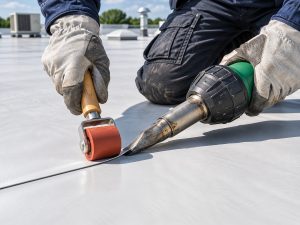
A roofer can heat-weld an approved patch to a clean, dry membrane if the existing surface can accept a sound weld. TPO and PVC each require materials compatible with their own system.
EPDM (Rubber) Roofs
An EPDM repair typically uses compatible cleaner, primer and repair tape or a cover strip. Proper surface preparation helps the patch bond to weathered rubber. For more on membrane repairs in southern Indiana, see our flat roof repair guide for Evansville, IN.
Modified Bitumen and Built-Up Roofs
After assessing the damaged layers, a roofer can rebuild the affected area with compatible materials and restore the protective surface. The application method depends on the existing assembly and the approved repair system.
Metal Roofs
Common repairs include replacing compatible fasteners and sealing washers, addressing open panel laps and treating localized corrosion. A panel with severe corrosion or holes may need replacement.
Drainage Checks
If water keeps backing up near the repaired area, it can find another opening. Check roof drains and strainers for debris, scuppers and gutters for blockages, and downspouts for signs of backup. Note where water collects and whether the slope directs it toward an outlet.
In Columbus, winter freezes and heavy spring rain can expose drainage problems that went unnoticed during dry weather. Water that remains more than 48 hours after rainfall is a reason to check for a blocked outlet, a low spot or a slope problem.
Flashing Checks
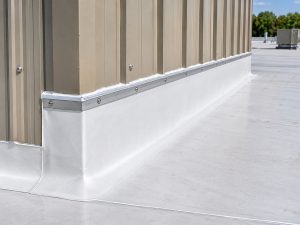
Flashing keeps water out where the roof meets walls, HVAC curbs, skylights and edges. Look for loose metal, open corners, cracked sealant and membrane pulling away from vertical surfaces. If a leak appears near a curb or wall, check the flashing before assuming the nearby seam is the source.
The Limits of a Localized Repair
A patch makes sense when the damage is isolated and the surrounding roof is sound. A larger assessment is useful when:
- Wet insulation extends across a large area.
- Leaks appear in several parts of the building.
- The membrane is brittle, shrinking or cracking across the roof.
- The roof is near the end of its service life and has multiple signs of wear.
- The same area keeps leaking after previous repairs.
Ask what the inspection found, what a spot repair would leave unresolved and whether replacing a section would address the problem. Those details help you compare repair and replacement costs.
How to Check Completed Work
The final check should match the repair. A cooled heat-welded seam can be probed for gaps. A taped patch or flashing repair should be checked for secure edges and terminations. If drainage contributed to the leak, verify that the outlet is clear and water can reach it.
A roofer may use a controlled water test for a hard-to-trace leak when conditions allow. Before-and-after photos can document work that’s difficult to see from the ground. At closeout, check that loose fasteners and scraps have been removed from the work area. After the next heavy rain, look for fresh moisture at the original stain or drip location and report any changes.
Why Columbus Building Owners Call Outdo
Outdo Commercial Roofing offers commercial roof maintenance and repairs. When you call about a Columbus property, share where the leak appeared, when you first noticed it and whether equipment work or a storm preceded it. Those details give the roofer a starting point for the inspection.
Schedule Commercial Roof Repair in Columbus, IN
If you’ve noticed a new ceiling stain, a recurring drip or water that won’t drain, have the roof checked before the next storm. Call Outdo Commercial Roofing at 574-536-2823 or contact our team to discuss your Columbus building.
Frequently Asked Questions
How long does a commercial roof repair take?
It depends on roof access, weather, the materials involved and how far the damage extends. A small membrane patch is a simpler job than opening the roof to replace wet insulation.
Can you repair my roof without replacing it?
Often, yes. A localized repair can be enough when the damage is limited and the surrounding roof is sound. The condition beneath the surface can affect the scope.
How do I know where my roof is leaking?
Water can travel beneath the membrane or along the deck before dripping indoors. The drip helps narrow the search. Nearby seams, flashing and drainage paths are useful places to check, and suspected hidden moisture may need further assessment.
Is ponding water on my flat roof a problem?
Water that remains more than 48 hours after rain is worth investigating. A blocked outlet, low spot or slope problem can slow drainage, and persistent ponding can add load to the roof.
Can rubber, TPO and metal roofs be repaired?
Yes, when the damage is limited and the existing roof can accept a compatible repair. EPDM patches, heat-welded TPO repairs and metal fastener or panel repairs use different materials and methods.
When should I replace instead of repair?
Replacement may make more sense when insulation is wet across a large area, the membrane is failing in several places or leaks keep coming back despite repairs. An inspection can help determine whether replacing one section would be enough.