
A roof leak can start with a lifted seam, a clogged drain or a gap around a vent. From the parking lot, the roof may look fine. A commercial roof inspection can catch visible defects before a ceiling stain or drip is the first sign of trouble.

If you manage a commercial building in Jeffersonville, call Outdo Commercial Roofing at 574-536-2823 to discuss an inspection. This guide explains what a visual inspection can cover, what to look for in a report and when a roof may need separate testing.
Why Roofs in Jeffersonville Need Regular Checks
Jeffersonville roofs face hot summers, heavy spring rain and winter freeze-thaw cycles. Wind can lift loose edges, and debris can block drains. After a storm, damage to seams and flashing can be hard to see from the ground.
Spring and fall are useful times to schedule an inspection. A spring visit can pick up winter damage, and a fall visit can identify drainage issues before colder weather. Arrange an additional check after significant hail or strong winds, even if you haven’t seen water inside.
What the Inspection Covers
The scope depends on the roof type, which areas can be accessed safely and what prompted the visit. Before scheduling, confirm whether the inspection covers the full accessible roof or focuses on a specific leak or roof section.
- Roof surface: Look for wear and damage on the membrane, coating or metal panels.
- Seams and flashing: Check for lifted edges, open joints and loose or damaged flashing.
- Drainage: Look for debris, signs of backup and standing water around drains, gutters and scuppers.
- Rooftop openings: Check seals and flashing around HVAC curbs, vents, pipes and skylights.
- Perimeter: Look for damaged edge metal and openings at parapets and wall caps.
- Interior signs: When included and accessible, ceiling stains and other signs of moisture can help narrow the search for a leak.
Problems a Visual Inspection Can Spot
A close look at the accessible roof can reveal defects that aren’t visible from the ground, including:
- Water that remains two days after rain
- Blisters, cracks or punctures in the membrane
- Seams that have started to separate
- Loose, bent or torn flashing
- Drains blocked by leaves or other debris
- Coating that has thinned, turned chalky or started to peel
Surface wear doesn’t always mean the roof needs replacement. If the underlying assembly is dry and sound, and defects can be repaired first, a compatible coating may be an option. See our guide to the advantages of commercial roof coating for more on when it makes sense.
Your Report: Photos and Written Notes
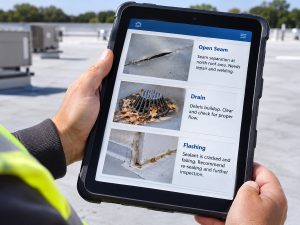
A useful inspection report helps you understand what was found without having to go onto the roof. For each significant finding, look for a location, a plain-language description and a recommended next step. A wide photo helps you find the area later, while a close-up shows the defect. On larger roofs, a marked layout can help your maintenance team locate each item.
The report should distinguish issues that need prompt attention from items that can be monitored. It should also identify areas that couldn’t be checked and conditions that still need testing. Confirm what documentation is included when you schedule, especially if you need photos, a roof map or written priorities.
Keep dated reports with your maintenance and warranty records. They can help you compare conditions over time and give an insurer context if you need to document storm damage.
What a Visual Inspection Can See vs. What Needs Testing
A visual inspection can document an open seam, a blocked drain or a stain on an accessible ceiling. Those observations may point to a likely leak source. They don’t show how far moisture has spread beneath the membrane or confirm that insulation is dry.
Depending on the finding and the roof assembly, a separate assessment may involve:
- Infrared scanning: Flags temperature differences that may indicate trapped moisture when roof and weather conditions are suitable.
- Moisture meter readings: Help compare suspect areas and narrow down where further checks may be useful.
- Targeted core samples: Let a qualified roofer examine the roof layers and confirm moisture at a sampled location. The opening must be repaired afterward.
- Electronic leak detection: Can help locate small membrane breaches on compatible assemblies.
- Additional access: Locked rooms, roof hatches and areas above ceiling tiles may require arrangements with the building manager.
Ask what a proposed test would confirm and how the result could change the repair plan. That helps you decide whether the added access or testing is worth arranging.
Talk to Outdo Commercial Roofing
If you’ve noticed a recurring ceiling stain, standing water or damage after a storm, share when it appeared and which part of the building is affected. Call Outdo Commercial Roofing at 574-536-2823 or contact our team to discuss a commercial roof inspection in Jeffersonville, IN.
Frequently Asked Questions
How often should I get a commercial roof inspection in Jeffersonville, IN?
Spring and fall are useful starting points. Arrange another check after significant hail or strong winds, and follow any inspection schedule specified in your roof warranty.
How long does an inspection take?
Timing depends on roof size, access, the number of roof sections and whether interior areas are included. Separate testing may require additional time or a return visit.
Will I get pictures of what you find?
Confirm the reporting scope when you schedule. If you need photos, ask for both a close-up of each significant defect and a wider view that shows where it is on the roof.
Can a visual inspection find every leak?
No. A visual inspection can identify surface defects and likely entry points, but water can travel beneath the membrane before it appears indoors. Further access or targeted testing may be needed to confirm the source or extent of hidden moisture.
Do I need to be there during the inspection?
Confirm access arrangements when you book. If the roofer needs to reach a locked roof hatch or look at interior stains, arrange for someone to provide access.
Can the report help with insurance or my warranty?
A dated report and photos can document visible conditions and past maintenance. Your insurer determines claim coverage, and the written roof warranty specifies which inspections and records are required.