

A commercial roof leak can start with a clogged drain, a lifted seam or cracked flashing around a vent. Regular roof maintenance in Bloomington, IN, gives you a chance to catch those problems before water reaches the insulation or shows up on a ceiling tile. Spring rain, hot summers and winter freeze-thaw cycles make it useful to check the same areas on a regular schedule. Call Outdo Commercial Roofing at 574-536-2823 to discuss your roof.
This guide explains what to check by roof type, when to schedule follow-up and which records to keep. If you also manage a property in Evansville, IN, the same maintenance principles apply. See our commercial roof maintenance and repair services for more information.
Why a Maintenance Plan Beats Waiting for Leaks
A low-slope roof can look fine from the ground while water collects around a blocked drain or slips through an open seam. By the time a stain shows up inside, moisture may have spread beyond the spot where it first entered. Wet insulation can also lose some of its thermal performance.
A maintenance plan tells you what gets checked, who handles it and when. It also gives you a record to compare against the next visit. A small puddle that disappears quickly and a low spot that holds water after every storm are different problems. Dated photos and notes help you tell them apart.
Material-Specific Roof Upkeep
Different roof materials wear in different ways. Use the roof system and the manufacturer’s maintenance instructions to guide the checks.
TPO and PVC Single-Ply Roofs
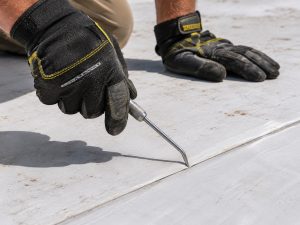
- Look for openings at welded seams. A trained roofer can use a seam probe where appropriate to assess a suspect weld.
- Check for scuffs and punctures near HVAC units and along service routes.
- Use cleaning products and methods approved for the membrane.
EPDM (Rubber) Roofs
- Check seam tape and lap edges for lifting or separation.
- Look for membrane pulling tight or lifting away from walls and corners.
- Note cracks, punctures and worn flashing around equipment and vents.
Modified Bitumen and Built-Up Roofs
- Look for blisters, splits and areas where protective granules or gravel have worn away or shifted.
- Check asphalt flashing and its upper edges for cracking or separation.
- Have worn areas evaluated for a compatible repair, especially where the underlying material is exposed.
Metal Roofs
- Look for loose exposed fasteners, damaged sealing washers and lifted trim.
- Check for corrosion at panel laps, cut edges and around rooftop equipment.
- Have cracked or separated sealant evaluated where the panel detail relies on it.
Drains, Scuppers, and Gutters: Keep Water Moving
Leaves, seeds and windblown debris can block drainage outlets. On wooded Bloomington properties, pay extra attention during fall leaf drop. Water that remains more than 48 hours after rainfall is a reason to check for a blockage, a low spot or a slope problem.
- Check drains, scuppers and strainers for debris.
- Look for damaged or missing strainer baskets.
- Record where water collects and how long it remains after rain.
- Have a slow drain evaluated if water still backs up after surface debris is removed.
- Check gutters and downspouts for sagging, gaps and loose attachments.
Include drainage in spring and fall inspections and after major storms. Leave work that requires roof access to trained personnel.
Seams and Flashing: Common Leak Points
Seams: Look for gaps, wrinkles and lifted edges along accessible seams. Heat-welded seams are part of the strength of TPO roofing systems, but even a well-made seam deserves attention as the roof ages or after work nearby.
Flashing: Check where the roof meets walls, parapets, HVAC curbs, skylights, pipe boots, vent stacks and perimeter metal. Look for cracked sealant where the detail relies on it, loose metal and gaps at corners. A cracked pipe boot can let water in even when the surrounding membrane looks sound.
Keep Good Service Records
A roof file helps you track recurring issues, budget for repairs and show what maintenance was done. Keep these items together:
- Inspection dates and the names of the people or contractors who performed the work.
- Dated photos of problem areas, taken from the same angle when practical.
- A roof map showing drains, rooftop equipment and past repairs.
- Repair details, including the location, materials, cost and any follow-up needed.
- The installation date and written warranty documents.
Check the warranty for its inspection schedule, recordkeeping rules and repair restrictions. A shared digital copy makes it easier for the next facility manager to find the roof’s history.

Follow-Up Timing: A Simple Schedule
Use this schedule as a starting point, then adjust it for your roof condition, rooftop traffic and warranty requirements.
| When | What to check |
|---|---|
| Spring (March–April) | Inspect for winter damage, open seams and drainage problems after snow or ice has cleared. |
| Fall (October–November) | Check seams and flashing and clear drainage outlets before winter. |
| After major storms | Check drains, perimeter edges and flashing for debris or damage once access is safe. |
| After rooftop work | Look for punctures or disturbed flashing where HVAC or other crews worked. |
| When hidden moisture is suspected | Ask whether a professional moisture survey or targeted testing would help locate wet insulation. |
Set follow-up dates based on what the inspection finds. An active leak or open seam calls for prompt attention. A stable area of surface wear may only need photos and a recheck at the next visit.
When to Call a Pro for Roof Maintenance in Bloomington, IN
If you notice an open seam, a recurring puddle, a damp ceiling tile or flashing that has pulled loose, arrange an inspection. A visual check can identify surface defects. When moisture may be hidden, a roofer can advise whether separate testing is useful for that roof assembly.
Call Outdo Commercial Roofing at 574-536-2823 or contact our team to discuss a maintenance plan or request an inspection for your Bloomington building.
Frequently Asked Questions
How often should a commercial roof in Bloomington, IN, be inspected?
Spring and fall are useful starting points. Arrange an additional check after major storms or rooftop work, and follow any inspection schedule in your roof warranty.
Where do commercial roof leaks commonly start?
Open seams, damaged flashing and failed seals around rooftop openings are common entry points. A blocked drain can make those defects worse by letting water back up or collect nearby.
Can I do roof maintenance myself?
You can document visible overflow, loose downspouts and interior stains from safely accessible areas. Leave rooftop seam checks, flashing repairs and moisture testing to trained professionals. Check your warranty before authorizing repairs.
Does regular roof maintenance affect my warranty?
It can. Some warranties require inspections or maintenance records. Keep dated notes and photos, and follow the terms for your specific roof system.
How long should water stay on a flat roof after rain?
If water remains more than 48 hours after rainfall, have the area checked. A clogged outlet, low spot or slope problem may be slowing drainage. The roof system may also have its own requirements for standing water.
What should a roof maintenance report include?
A useful report lists the inspection date, the location and condition of each problem, available photos and recommended next steps. It should distinguish urgent repairs from items to monitor and note any areas that could not be checked.