

A TPO roof depends on more than the membrane. A sturdy sheet can still leak if a seam is poorly welded, flashing pulls away from a pipe or water collects behind an HVAC curb. Those details are worth asking about before you approve a roofing proposal.
If you’ve read about the strength of TPO roofing systems, this guide explains how installation affects that performance. Call Outdo Commercial Roofing at 574-536-2823 to discuss your roof.
Why TPO Roofing Makes Sense in Clarksville, IN
Clarksville sits along the Ohio River, where commercial roofs face summer heat, winter freeze-thaw cycles and heavy spring rain. A white TPO membrane can reduce the amount of sunlight the roof absorbs. On a low-slope shop, warehouse or office, the roof still needs sound seams, secure attachment and a clear path to the drains.
Choosing the Right TPO Membrane
TPO is a single-ply roofing membrane. Commercial TPO sheets typically have a reinforcing fabric, called a scrim, between two layers of the material. Common thicknesses include 45, 60 and 80 mil. Sixty mil is a common option, while a thicker sheet or designated walkway pads may make sense where technicians frequently service rooftop equipment.
Ask how the proposed membrane fits the building’s use, roof assembly and warranty requirements. A white surface can reduce solar heat gain, but the effect on cooling costs also depends on insulation, equipment and how the building is used.
How TPO Seams Are Welded
Where two sheets meet, the installer overlaps them and uses hot air and roller pressure to fuse the surfaces. Clean, dry laps matter. Dirt or dew can interfere with the weld, and settings that work in the morning may need adjustment as the roof heats up.
The finished weld should meet the membrane manufacturer’s required width. Test welds help establish the right heat and speed. Once a finished seam has cooled, probing it can reveal an opening that isn’t obvious from above.
How the Roof Is Attached
The right attachment method depends on the deck, wind loads and approved roof assembly. Three common methods are:
Mechanically Attached
Screws and plates secure the membrane to the deck, typically along the edge of each sheet. The next sheet overlaps the fastener row and is welded over it.
Fully Adhered
An approved adhesive bonds the membrane to a suitable cover board or insulation. The layers beneath it still need to be secured according to the wind design. Application conditions depend on the adhesive.
Induction Welded
Special plates are fastened below the membrane. An induction tool bonds the underside of the sheet to those plates without piercing the finished membrane at those points.
Ask how the proposed attachment accounts for higher wind loads at roof edges and corners. Outdo’s single-ply roofing page explains where TPO fits among commercial roofing options.
Sealing Penetrations the Right Way
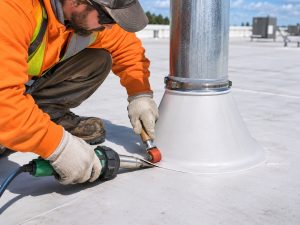
Vent pipes, HVAC curbs, skylights and conduit interrupt the roof surface. Each one needs a flashing detail suited to its shape and the membrane system.
- Round pipes: A pre-molded TPO boot can be welded to the field membrane and secured around the pipe at the top.
- HVAC and skylight curbs: Compatible flashing wraps the curb and terminates securely at the top.
- Irregular openings: Grouped conduit or odd-shaped supports may need a fitted flashing detail or an approved penetration pocket with pourable sealant.
Where flashing meets the field membrane, follow the manufacturer’s welding detail. Where the assembly calls for a clamp or sealant, those parts also need to be installed as specified and checked during maintenance.
Drainage: Keeping Water Off the Roof
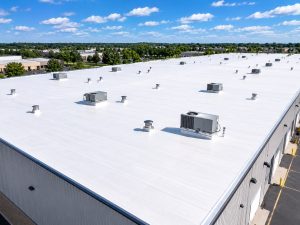
A low-slope roof still needs a way to move water off the building. Water that remains two days after rain is a reason to check for clogged outlets, low spots or runoff trapped behind rooftop equipment.
- Tapered insulation can create slope toward outlets.
- Crickets can steer runoff around HVAC curbs and other obstructions.
- Interior drains and strainers need to stay clear so water can enter the drain line.
- Scuppers and gutters can direct runoff off the roof edge where the design calls for them.
Before replacing or recovering a roof, note where water collects today. That gives the designer a starting point for deciding whether the project needs changes to slope, outlets or both.
Material Benefits vs. Installation Quality
A white TPO sheet provides a reflective surface, and the membrane is designed to remain flexible in service. The building’s performance also depends on how the roof is put together: welds close the overlaps, the attachment resists wind uplift, flashing seals openings and the drainage layout gives rainwater a path off the roof.
Two bids can list the same membrane thickness and still describe very different roofs. Compare how each proposal handles seams, edges, rooftop openings and existing drainage problems.
Get TPO Roofing Help in Clarksville, IN
If you’re planning a new TPO roof or dealing with recurring leaks on an existing one, start with the condition of the roof and the details that need attention. Call Outdo Commercial Roofing at 574-536-2823 or contact our team online to discuss your Clarksville building.
FAQs About TPO Roofing in Clarksville, IN
How long does a TPO roof last in Clarksville, IN?
Service life depends on the specific membrane, installation, drainage, rooftop traffic and maintenance. Ask for an estimate based on the proposed assembly and review the written warranty separately.
What is the best TPO thickness for a commercial building?
Sixty mil is a common option. A thicker membrane or walkway protection may make sense in areas with frequent equipment service. The choice depends on the assembly, expected traffic and product requirements.
Can TPO be installed over my old roof?
Sometimes. A roof recover depends on the condition and number of existing layers, moisture findings, compatibility and applicable requirements. Have the existing roof evaluated before choosing a recover.
Why are TPO seams welded?
Hot-air welding fuses overlapping TPO sheets into a continuous seam. Proper heat, speed and surface preparation matter. The installer can probe cooled seams to look for gaps.
How do I know if my flat roof has a drainage problem?
Look for water that remains two days after rain or dirt rings that show where it repeatedly collects. The right correction depends on whether the cause is a blocked outlet, a low spot or the roof’s slope.
How long does a TPO roof installation take?
Timing depends on roof size, weather, access and whether the old roofing or wet insulation must be removed. Ask for a project schedule based on the roof’s condition and the work included in the proposal.