

TPO roofing is a popular choice for low-slope commercial roofs. But how strong is it, really? The answer depends on the full roof system. The membrane, seams, insulation, cover board, and attachment all work together. When comparing full service TPO roofing proposals, look for a scope that addresses these components. Have questions about your roof? Call Outdo Commercial Roofing at (574) 536-2823.
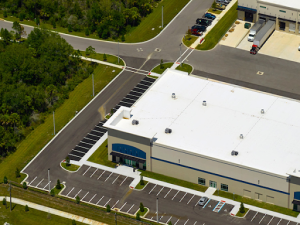
This guide explains three things that matter for TPO strength: seams, punctures, and weather. It also explains the limits, so you know what to expect.
What Is TPO Roofing?
TPO stands for thermoplastic polyolefin. It is a single-ply roof membrane supplied in rolls. Reinforced TPO sheets contain an internal fabric layer, called a scrim, that provides added strength.
Common membrane thicknesses include:
- 45 mil: A thinner option available in some product ranges
- 60 mil: A common intermediate thickness
- 80 mil: A thicker option available in many product ranges
Thickness is one factor in durability, but it does not determine performance by itself. Product construction, the supporting assembly, installation, exposure, and maintenance also matter. The right choice depends on the building, budget, rooftop activity, and selected system’s requirements.
TPO Seam Strength: Why Welded Seams Matter
Seams are where adjoining sheets meet. Openings or defects at these connections can allow water into the roof assembly.
TPO field seams are typically joined with hot air. The welding process fuses compatible membrane surfaces together. A properly made weld can provide a strong, watertight connection without relying on seam tape or adhesive at the welded joint.
Welded seams still require correct installation and inspection. They are not immune to defects, damage, or deterioration.
What Limits Seam Strength?
A welded seam performs well only when the weld is sound. Factors that affect it include:
- Welding settings: Heat, travel speed, and pressure must suit the material and conditions. Insufficient heat can leave a weak bond, while excessive heat can damage the membrane.
- Clean surfaces: Dirt, contamination, or moisture can interfere with welding.
- Installation conditions: Temperature, wind, and other site conditions can require changes to equipment settings.
- Seam checks: Test welds and inspection of cooled seams should follow the manufacturer’s requirements, including probing where specified.
Weathered TPO may need additional preparation before repairs can be welded successfully. Membrane condition and trial welds help establish whether a suitable repair can be made. Regular inspections help identify developing seam problems.
TPO Puncture Resistance: What It Can Handle
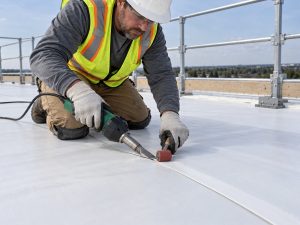
Commercial roofs see plenty of activity. Workers access rooftop equipment, tools can be dropped, and debris can land on the surface. The roof assembly needs to account for these exposures.
TPO’s reinforcement contributes to its strength, but a membrane can still be punctured or torn. Resistance depends on the product, the supporting materials, and the type of impact.
Puncture Resistance Depends on the Full Roof Assembly
What sits beneath the membrane makes a difference. The supporting assembly influences how the roof responds to concentrated loads and impacts. Key considerations include:
- Membrane selection: Thickness and product construction affect performance.
- Cover board: An appropriate cover board can provide a firmer supporting surface and contribute to the tested assembly’s impact performance.
- Insulation: Its compressive properties and attachment affect support beneath the membrane.
- Walkway pads: Approved pads help protect designated service routes, such as access to rooftop units.
If your roof receives frequent service traffic, these choices deserve attention. A suitable assembly and managed access can help reduce damage.
Building owners considering TPO roofing in Evansville, IN should compare the complete assembly, including membrane thickness, cover board, insulation, and attachment, rather than choosing on the top sheet alone.
TPO Weather Performance: Sun, Wind, Rain, and Hail
A roof’s main job is to keep weather out. TPO’s performance depends on both its material properties and how the complete system is designed and installed.
Sun and Heat
White TPO membranes reflect sunlight and can reduce solar heat gain. This may lower cooling demand, depending on the building and climate. TPO products are formulated for outdoor exposure, but heat, sunlight, aging, and maintenance affect their condition over time.
Compare the selected product’s performance information and assembly requirements rather than assuming that thickness alone establishes service life.
Wind
Wind can create uplift forces on a low-slope roof. How the roof resists those forces depends on the full assembly. Common attachment methods include:
- Mechanically attached: Fasteners and plates secure the membrane according to an approved layout.
- Fully adhered: Compatible adhesive bonds the membrane to an approved substrate.
- Induction welded: The membrane is bonded to compatible coated plates secured beneath it.
Wind ratings apply to specific tested assemblies, not the membrane alone. The deck, underlying components, fasteners, spacing, perimeter details, and edge metal all matter.
Rain and Standing Water
An intact TPO membrane and sound welded seams provide a barrier against water. Flashing, penetrations, and drainage connections must also be correctly detailed.
Persistent standing water adds load, collects debris, and deserves investigation. Drainage should meet the roof design and applicable requirements, with clear outlets and any necessary slope improvements.
Hail and Cold
Cold-weather performance and impact resistance depend on the selected membrane and assembly. Hail damage is influenced by factors such as impact size and speed, membrane condition, support beneath the sheet, and temperature.
Where hail is a concern, compare assemblies with relevant tested ratings. A thicker membrane or cover board can contribute to performance, but neither makes a roof hail-proof.
Is TPO Roofing the Right Fit for Your Building?
TPO can suit many warehouses, offices, stores, and factories. It may be worth considering when you want:
- Heat-welded field seams
- A reflective roof surface where appropriate for the building
- An assembly selected for the project’s wind, impact, drainage, and service-access requirements
Suitability also depends on the existing roof, substrate, building use, and project goals.
Get Expert Help With Your TPO Roof
A strong TPO roof starts with informed choices about the complete system. Contact Outdo Commercial Roofing to discuss your roof, an assessment, and the options for your building and budget.
Call (574) 536-2823 to arrange a roof check.
Frequently Asked Questions
1. How long does a TPO roof last?
Service life varies with the product, complete roof assembly, installation, exposure, drainage, and maintenance. Membrane thickness and warranty duration do not guarantee a particular lifespan. Regular inspections and prompt repairs help manage developing problems.
2. Are TPO seams stronger than other roof seams?
Properly made hot-air welds can form strong connections between compatible TPO sheets. That does not establish that every TPO seam is stronger than every other roofing seam. Performance depends on the materials, installation, condition, and test method.
3. Can you walk on a TPO roof?
Necessary maintenance access may be possible where the structure and roof condition are suitable and safe access and fall protection are provided. Limit unnecessary traffic and use approved walkway protection along designated service routes.
4. How well does TPO roofing handle hail?
Hail performance depends on the entire assembly and the severity of the event. Ask about relevant tested assembly ratings and how the proposed membrane, cover board, and insulation address the project’s exposure.
5. What TPO thickness should I choose?
Common options include 45, 60, and 80 mil, depending on the product range. Choose based on the approved assembly, project performance requirements, rooftop activity, budget, and warranty eligibility. Thickness alone does not determine the best system.
6. Does a TPO roof help lower energy bills?
A reflective white TPO roof can reduce solar heat gain and may lower cooling demand. Actual energy savings depend on insulation, climate, building use, equipment, and the existing roof. Savings are not guaranteed.