
A new roof is a big job for any business. It takes time, money, and good planning. When the work is done right, the roofing system provides dependable protection. When it is rushed, problems can come back fast.
Maybe your roof leaks again and again. Maybe it is old and deteriorated. Or maybe you want to improve the building’s energy performance. Depending on the roof’s condition, a commercial roof replacement may be a sensible investment. It protects what is inside and can support the long-term value of your property.
This guide walks you through each step, from the first roof assessment to the final paperwork. To discuss your commercial roof replacement project with Outdo Commercial Roofing, call 574-536-2823.
Why a Good Plan Matters
A roof project has many moving parts. There are crews, trucks, dumpsters, and material deliveries. Permits and inspections may also be required. Your business may need to operate while work takes place.
A clear plan helps coordinate these activities, reduce avoidable delays, and identify costs and responsibilities before work begins.
Step 1: Determine if You Actually Need a New Roof
Start with a roof inspection. A trained roofer should assess safely accessible areas for:
- Leaks, water stains, and interior drips
- Open or separating seams
- Lifted panels or loose edges
- Signs of damaged decking or insulation
- Standing water or evidence of drainage problems
Accessible interior areas may reveal wet ceiling tiles or deterioration on the underside of the deck. Where concealed moisture is suspected, a separately scoped moisture survey or sampling may be appropriate. Thermal imaging can identify suspect areas under suitable conditions, but findings may need confirmation.
Not every old roof needs replacement. Some roofs can be repaired, while others may be suitable for restoration with a compatible coating system. A thorough assessment helps establish which option makes sense. Skipping this process could mean replacing a roof before it is necessary.
If your building has a low-slope roof, learn more about Flat Roof Replacement in Evansville, IN.
Step 2: Set a Clear Budget
The price of a commercial roof replacement depends on:
- The size of the roof
- The selected roof system
- The condition of the existing roof and deck
- Access and staging requirements
- Labor and disposal costs
Include a contingency for concealed conditions. The appropriate allowance depends on what the initial assessment establishes and how much remains unknown. Agree on pricing methods and authorization procedures for additional work before the project begins.
Also consider long-term costs. Insulation improvements and suitable reflective roofing may reduce energy use, depending on the building. Compare maintenance needs and actual warranty coverage alongside the installation price. The cheapest initial proposal is not always the best long-term value.
Step 3: Pick the Right Roof Material
Your roofer should help you compare your choices. Each system works differently. Common options include:
- TPO: A single-ply membrane commonly available in reflective white finishes. Performance depends on the selected product and complete roof assembly.
- EPDM: A rubber membrane used on low-slope roofs. Suitability and cost depend on the assembly, attachment method, and project requirements.
- Metal: A durable roofing option where suitable for the building’s slope and design. It requires appropriate attachment, flashing, and maintenance.
Think about local weather, building use, drainage, and energy goals. Ask which systems the contractor installs and why a particular option is recommended. The proposal should explain the advantages and limitations in plain language.
Step 4: Get the Right Permits
Confirm permit and inspection requirements with the authority responsible for your property before work begins. The contract should state who obtains required approvals and coordinates inspections.
Include these requirements in the schedule and budget. Do not assume that every replacement has the same approval process.
Step 5: Plan the Job Site and Staging
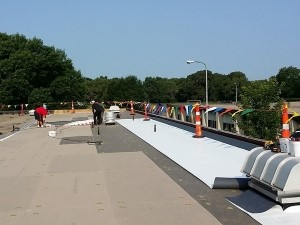
Before work starts, plan where everything will go. This is called staging. Good staging helps protect people, coordinate deliveries, and manage disruption to the business.
Talk with your roofer about:
- Where dumpsters and materials will be placed
- Where cranes or lifts will operate
- Which parking spaces or access routes will be restricted
- Safe entrances and exits for staff and customers
- Work hours and noise
- Protection of rooftop equipment and items inside the building
- Daily cleanup and temporary weather protection for unfinished areas
If the building will remain occupied, notify affected staff and customers in advance. Whether operations can continue depends on the work, safety arrangements, and building use.
Step 6: Tear-Off, Deck Repairs, and Installation
Tear-Off or Recover?
One key choice is what to do with the old roof. A tear-off removes the existing roof assembly to the extent specified in the project scope, allowing exposed deck areas to be assessed. A recover installs an approved new assembly over suitable existing roofing.
A recover may cost less, but suitability depends on the existing assembly, moisture condition, attachment, loading, and applicable requirements. Wet or unsound materials must be addressed rather than concealed beneath a new roof.
A tear-off provides more direct access to the deck, though concealed conditions elsewhere in the building may still require additional investigation.
Fixing the Deck
The deck supports the roof assembly. Deteriorated or structurally unsuitable areas must be evaluated and repaired or replaced as required before new roofing is installed.
Agree on a pricing method for deck repairs before work starts. Depending on the construction, this may involve unit prices, defined allowances, or a separate scope for structural work.
This is also a good time to evaluate insulation, drainage, and skylights. Worn skylights or their flashing may need attention. If skylight work is planned, discuss coordinating Skylight Replacement in Evansville, IN with the roofing project.
Putting on the New Roof
The work plan should limit open roof areas and provide suitable temporary weather protection. The crew then installs the specified roof assembly, including insulation where required, attachment, edges, flashing, and details around pipes, vents, and rooftop equipment.
Installation must follow the selected system’s requirements. Project duration depends on roof size, complexity, deck repairs, access, and weather.
Step 7: Final Inspection and Closeout
Arrange a completion review with the contractor. Roof access should be limited to people with suitable training and protection; photos or a ground-level meeting can help owners review the work without climbing onto the roof.
Confirm completion of the agreed scope, any required inspections, and site cleanup.
Closeout documents to specify in the contract include:
- Required permit or inspection approvals
- Applicable manufacturer and contractor warranty documents
- A record of installed materials
- Project photos documenting relevant stages and completed work
- Maintenance instructions and recommended inspection intervals
Keep these records for future maintenance, warranty questions, insurance documentation, and additional building work.
Your Partner for Commercial Roof Replacement
A commercial roof replacement is a substantial project. Careful assessment, planning, and installation help protect the building and manage long-term costs. Actual performance depends on the system, workmanship, exposure, and ongoing care.
Ready to discuss your roof? Call Outdo Commercial Roofing at 574-536-2823 to arrange an inspection and discuss your options.
Frequently Asked Questions
1. How long does a commercial roof replacement take?
Timing depends on roof size, the selected system, deck repairs, access, and weather. Ask for a project-specific schedule and an explanation of conditions that could change it before work begins.
2. How do I know if I need a repair or a full replacement?
An inspection helps establish the extent of deterioration and whether the surrounding roof remains serviceable. Localized defects may be repairable. Widespread damage or concealed moisture can require further investigation before choosing repair, restoration, or replacement.
3. Can a new roof go over my old roof?
Sometimes. A recover requires a suitable existing assembly and must meet the selected system’s requirements and applicable approvals. Moisture, damaged materials, attachment, and loading need assessment before proceeding.
4. What happens if the roof deck is damaged?
Damaged decking must be evaluated and addressed before roofing is installed over it. The contract should explain repair pricing, authorization for additional work, and when specialist evaluation may be needed.
5. Can my business stay open during the roof replacement?
It may be possible, depending on building use, access, noise, odors, equipment needs, and safety restrictions. Agree on an occupancy and staging plan with the contractor before work starts.
6. What should I get from my roofer when the job is done?
Specify closeout documents in advance, including applicable warranties, required inspection approvals, material records, project photos, and maintenance instructions. Keep them for future roof care and any coverage questions.