

Most commercial roof leaks start with something small: a clogged drain, a lifted seam, or a backed-out flashing screw. Problems like these can go unnoticed long before a stain shows up inside. Good roof maintenance in New Albany, IN, helps you find those problems early, before water reaches the insulation and ceiling tiles. Outdo Commercial Roofing also provides roof maintenance in Evansville, IN. Call 574-536-2823 to set up an inspection.
Below, we explain what to check on each roof type, how the roof is held down, where leaks usually start, and how to keep good records.
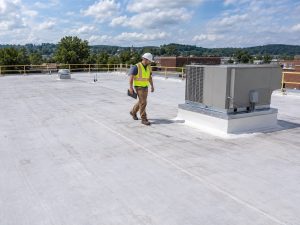
Why New Albany Roofs Need a Real Plan
New Albany’s hot summers, storms along the Ohio River, and winter freeze-thaw cycles each call for different tasks. Use this season-by-season checklist when planning professional maintenance:
- Spring: Look for winter damage, like cracked sealant, lifted seams, and loose edge metal. Clear out drains and scuppers.
- Summer: Look for blisters, soft spots, and cuts or scuffs near HVAC units after equipment service. Watch for ponding after thunderstorms.
- Fall: Clear leaves from drains, gutters, and scuppers. Have worn seals at pipe boots and pitch pans repaired and loose fasteners and edge metal secured before cold weather.
- Winter: Keep drainage paths open for melting snow. Have a roofer check for ice buildup at drains when conditions allow, and watch interior ceilings for new stains.
Material-Specific Roof Upkeep
Not every roof needs the same care. Here is what to look for on the most common commercial roofs.
TPO Roofs
TPO seams are heat-welded. Hot air fuses the overlapping sheets together, so the weld doesn’t rely on glue or tape. A trained roofer can use a seam probe to check for gaps or lifted edges. Heat-welded seams are a big part of the strength of TPO roofing systems, so a lifted weld should be addressed quickly. Also look for scuffs and punctures near HVAC units. If the surface needs cleaning, follow the membrane manufacturer’s guidance.
EPDM Roofs
EPDM is rubber, and its seams are taped or glued. Check for seam edges that are starting to lift. Repairs need products compatible with EPDM, since the wrong primers or tapes may not stick. Also check corners and walls, where older EPDM can shrink and pull at the edges.
Modified Bitumen and Built-Up Roofs
Look for blisters, cracks, and bare spots where the surface has worn away. Small cracks that look like alligator skin can be a sign of surface aging. A coating or repair may help, depending on the roof’s condition.
Metal Roofs
Check for loose or missing screws and rust at seams and laps. Look for cracked sealant around fasteners and panel overlaps, and have a roofer check whether it needs replacing.
How the Membrane Is Held Down
Three common ways to hold single-ply roofing in place are mechanical attachment, full adhesion, and ballast. The method depends on the roof assembly, the deck, and the manufacturer’s specifications. Each one has its own trouble spots.
Mechanically Attached
Screws and plates hold the membrane to the deck. In systems fastened at the seams, the overlapping sheet covers the fasteners. Look for fasteners pushing up under the membrane and tears around the plates. If the membrane lifts or billows in the wind, have a roofer check the attachment and look for air getting under the roof.
Fully Adhered
The membrane is bonded to the surface below it with adhesive. Look for lifted edges, bubbles, and areas where the bond may have failed. Pay extra attention to corners and the roof edge, where wind uplift is often strongest.
Ballasted
The membrane lies loose and is held down by stone or pavers. After strong wind, check for shifted ballast that leaves bare membrane showing. Also look for stones near drains and cracked pavers.
Drains, Scuppers, and Gutters
Water that can’t drain puts extra strain on a flat roof. During a maintenance visit, check the full drainage path:
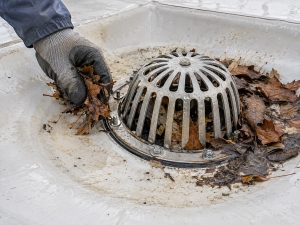
- Clear leaves, dirt, and trash from drains and scuppers.
- Check that drain strainers are in place and secure.
- Have the roofer check the clamping ring and bolts on drains that use them.
- Look for ponding. Water still sitting about 48 hours after rain is a warning sign. Check your manufacturer’s requirements for your specific roof.
- Clear gutters and check that downspouts flow freely.
Seams and Flashings: Where Many Leaks Start
Many leaks start where materials meet or where the roof changes direction. Include these spots in each inspection:
- Edge metal along the roof’s outside border
- Wall flashing where the roof turns up a parapet or wall
- Seam laps where two sheets of membrane meet
- Termination bars that hold the top of wall flashing in place
A small gap can let water get beneath the roof surface before you see a stain inside.
Roof Penetrations: Pipes, Curbs, and Units
Every pipe, vent, or unit that passes through the roof is a possible leak spot. Each one is sealed in its own way:
- Pipe boots slip over round pipes. Look for cracked rubber and loose clamps at the top.
- Curbs are raised frames under HVAC units and skylights. Check the flashing at the corners for splits or gaps.
- Pitch pans hold sealant around irregular penetrations. Look for sealant that has shrunk or pulled away from the pan or pipe.
- Counterflashing covers the top of the base flashing. Look for loose screws and cracked sealant.
Depending on what failed, a roofer may renew pitch pan sealant, replace a cracked pipe boot, secure a loose clamp, or reseal counterflashing. If the insulation around a curb is wet, the repair may need to extend below the roof surface.
Keep Good Service Records
Good records help you track changes, budget for repairs, and document maintenance. After each visit, save:
- The date and who did the work
- Photos of problem spots, before and after repair when available
- A roof map or location notes showing where each issue was found
- A list of completed repairs and repairs still needed
- Any maintenance requirements from the roof manufacturer
Check your warranty for any inspection and recordkeeping requirements. The same records can help you plan future repairs.
Follow-Up Timing That Works
- Spring and fall: Schedule a roof inspection and check that drains are clear.
- After major storms: Have the roof checked for hail damage, loose edge metal, shifted ballast, and debris.
- After other trades work on the roof: Check the work area for cuts, dropped screws, and damage around equipment.
- When an inspection finds damage: Prioritize repairs based on the findings so a small problem doesn’t spread.
Schedule Roof Maintenance in New Albany, IN
When scheduling a maintenance visit, ask which areas the inspection will cover, what documentation is included, and which repairs would be quoted separately. Outdo Commercial Roofing serves building owners who need roof maintenance in New Albany, IN, or roof maintenance in Evansville, IN. Learn more about our maintenance and repair services, call 574-536-2823, or contact our team to set up your next visit.
FAQs
1. How often should a commercial roof get maintenance?
Spring and fall inspections are a good starting point. Schedule an additional check after a major storm, and follow any inspection schedule specified in your warranty.
2. What happens during a roof maintenance visit?
A visit can include checking the roof surface, seams, flashings, penetrations, and drains. Depending on the scope, it may also include debris removal and documentation of problem spots. Ask what the visit includes when you schedule it.
3. Can regular maintenance help my roof last longer?
Yes. Clearing drains and addressing loose flashing, cracked pipe boots, or lifted seams early can help keep water out of the insulation and roof deck.
4. How do I know if my flat roof has a drainage problem?
Water still sitting on the roof about two days after rain is a common warning sign. Dirt rings, moss, or staining near a drain can also show where water collects. If a ceiling stain appears near a roof drain, have the area checked to confirm the source.
5. Does roof maintenance keep my warranty valid?
Warranty terms vary. Check whether yours requires regular inspections, specific maintenance, or proof that the work was done. Keep dated reports, photos, and repair records to document the care your roof receives.
6. How much does commercial roof maintenance cost?
Cost depends on the roof’s size, type, age, and condition, as well as what the visit covers. Ask whether drain cleaning, photos, and a written report are included and whether repairs are quoted separately. Call 574-536-2823 to request a quote for your property.