
Trapped moisture and poor surface preparation can both cause a roof coating to fail early. A good roof coating in Columbus, IN, starts with the roof underneath it: the surface needs to be sound, compatible with the coating, and ready for application.
If you’re still comparing products, read our guide on selecting the best commercial roof coating. This post covers which roof surfaces may qualify, how moisture can be checked, what needs repair, and how the coating system goes on.
Questions about your building? Call Outdo Commercial Roofing at 574-536-2823.
Roof Surfaces That Can Be Coated and What Each One Needs
The substrate is the roof surface the coating sticks to. Each surface has its own preparation requirements and conditions that can rule out coating.
- Metal: Clean the panels, address corrosion, and repair loose fasteners or laps. Use a compatible rust-inhibiting primer where the system requires it. Widespread rust that has eaten through the panels can rule out coating.
- TPO: Clean and prepare the membrane according to the coating system’s instructions. For example, Conklin requires Affinity Primer under Affinity Base Coat on TPO. A brittle membrane or widespread seam failure can rule out coating.
- PVC: Use a coating system approved for the specific PVC membrane. A primer approved for TPO or EPDM may not work on PVC. For example, Conklin’s Affinity Primer is not for PVC. Check for brittleness and shrinkage at edges before considering coating.
- EPDM: Remove dirt and weathered residue, then follow the coating manufacturer’s instructions for primer and adhesion testing. Widespread seam failure or shrinkage that pulls the rubber away from walls and edges needs attention before coating.
- Modified bitumen: Remove loose granules and dirt. The selected system determines whether a primer is needed. Widespread cracking, separated layers, or large blisters can make coating unsuitable.
- Built-up roofs: Remove loose surfacing where required, and verify that the coating is approved for the existing roof. Heavy blistering or an incompatible coal tar surface can rule out coating.
- Spray polyurethane foam: A compatible coating protects exposed foam from sunlight. Wet or damaged foam must be addressed before recoating.
When a Roof Passes or Fails
There’s no single cutoff that decides whether to coat or replace a roof. The decision depends on the condition of the roof surface and deck, the extent of any trapped moisture, and whether the damage can be repaired. A moisture survey or core samples can help when the condition below the surface is unclear. Widespread wet insulation or membrane failure can make replacement the better choice.
How Moisture Is Checked
- Infrared scan: A thermal camera looks for temperature differences that may indicate trapped moisture. Roof construction, weather, and surface conditions affect the results. Suspect areas can be marked on a roof plan for follow-up.
- Core cuts: Small samples can identify the layers and help confirm whether insulation is wet at the locations sampled. Core openings must be repaired afterward. Check any applicable warranty requirements before cutting samples.
Repairs Before the Coating
The repair depends on what the assessment finds:
- Wet insulation: Remove affected insulation, assess the deck below it, and rebuild the area with compatible materials.
- Loose metal fasteners: Secure or replace them with fasteners appropriate for the panel and substrate.
- Flashing: Repair or replace loose or split flashing and restore the seal where needed.
- Seams, splits, and blisters: Assess the affected layers and repair them with materials compatible with the existing roof.
- Ponding water: Address the cause. Depending on the roof, the solution may be tapered insulation, a cricket that directs water around an obstruction, or a drainage upgrade.
Before coating, confirm that the repaired areas and surrounding roof meet the system’s moisture and surface requirements.
Preparing the Surface
Remove dirt, residue, and loose material using the coating manufacturer’s approved cleaning method. Use a method that won’t damage the roof or force water into open seams. The surface needs to dry before primer or coating is applied. Cool or humid weather can slow drying.
Adhesion testing: Small test patches can show whether the proposed system bonds to the existing surface. Some methods use a fabric strip set into the coating and pulled after curing. Follow the manufacturer’s directions for test locations, cure time, and how to judge the result.
How the Coating System Goes On
- Reinforce vulnerable details: Some systems call for fabric at seams, drains, edges, or penetrations.
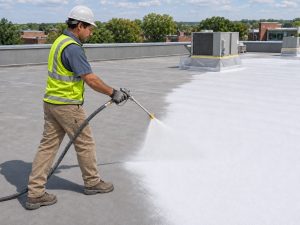
- Apply the base coat: Spray or roll it as directed for the chosen product.
- Allow it to cure: Follow the product instructions before applying the next layer.
- Apply the top coat: Build up the coverage and finished thickness required for the system.
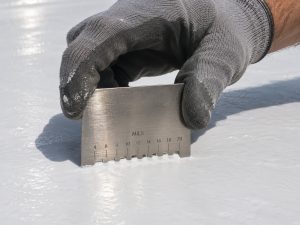
- Check thickness: A wet-film gauge can check the applied thickness while the coating is still wet. The required wet and dry thicknesses depend on the product and system.
- Follow weather limits: Check the product instructions for air and surface temperatures, humidity, dew point, and the expected dry-weather window.
When weighing the advantages of commercial roof coating, consider the roof you already have. The effect of a reflective coating depends on the product and building. Savings compared with a tear-off depend in part on how much of the existing roof can be retained.
Product Warranty vs. Expected Service Life
- Manufacturer or system warranty: Coverage depends on the system and written terms. Check which roof surfaces qualify, what thickness is required, and whether the warranty covers materials, labor, or both. Outdo lists an 18-year leak warranty covering materials and labor for its fabric-reinforced coating system, subject to the written terms.
- Workmanship warranty: When offered, this covers specified installation issues. Review what it includes and how long it lasts.
- Expected service life: This is how long the coating performs under actual conditions. Surface preparation, thickness, drainage, weather, and maintenance all matter. A worn coating may be suitable for recoating if the underlying roof is still sound and the new product is compatible.
What to Review Before Approving a Coating Proposal
Ask how the proposal accounts for the roof’s condition and how the finished work will be checked. Useful items include:
- A moisture map or core findings, if testing was performed
- A written list of repairs needed before coating
- The proposed coating system, primer, and required thickness
- How application thickness will be checked and whether readings will be recorded
- The warranty coverage and maintenance requirements
Call 574-536-2823 or contact Outdo Commercial Roofing to schedule a roof assessment in Columbus, IN.
Frequently Asked Questions
1. Will a coating stop my roof leaks?
A coating can protect a sound roof surface after repairs. Failed flashing, holes, and wet insulation need to be addressed before coating goes on.
2. How is it decided if my roof qualifies?
Start with the condition of the roof surface and the layers underneath. A moisture survey or core samples may help if there are signs of hidden water. Widespread wet insulation or membrane failure can make replacement the better option.
3. How long will a coated roof last?
Service life depends on the condition of the existing roof, surface preparation, coating thickness, weather exposure, drainage, and upkeep. The warranty term tells you how long specified coverage lasts. It doesn’t predict the roof’s service life.
4. Can my business stay open during work?
It depends on the building, the work area, and the product being applied. Discuss staging, air intakes, ventilation, and any access restrictions before work starts so you can plan around your operations.
5. Why do warranty terms vary?
Coverage can depend on the coating system, the existing roof surface, the required thickness, and maintenance conditions. Compare the written terms for the specific systems in your proposals.
6. Can the roof be recoated later?
Often, yes, if the underlying roof is sound and the existing coating can be prepared for a compatible new layer. Check whether the manufacturer offers warranty renewal for the proposed recoat and what conditions apply.