
Flat-roof leaks often begin at seams, pipe flashings or drainage details rather than in the middle of an undamaged membrane. By the time a ceiling tile turns brown, moisture may already have reached the insulation.
That’s why, when considering EPDM roofing in Bloomington, IN, the membrane is only part of the picture. Performance depends on how it’s attached, how the seams are made, how penetrations and edges are flashed, and where the water goes. Questions about your building? Call Outdo Commercial Roofing at 574-536-2823.
What Is EPDM, and Which Type Fits Your Building?
EPDM (ethylene propylene diene monomer) is a synthetic rubber membrane, and commercial EPDM roofing has been used on low-slope buildings for decades. It comes in wide sheets, which can reduce the number of field seams compared with systems using narrower sheets.
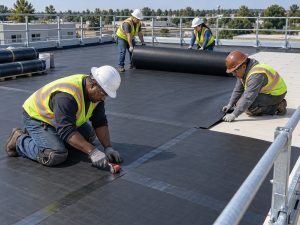
Three choices matter most. Common thicknesses include 45, 60 and 90 mil, with selection based on the approved assembly, project requirements and expected exposure. Reinforced sheets contain an internal scrim for added strength and are used in certain mechanically attached systems. Standard EPDM is commonly black, while reflective white-surfaced products are also available. Their effect on energy use depends on the building and climate.
How Bloomington’s Weather Affects an EPDM Roof
Southern Indiana winters bring repeated freeze-thaw cycles. Water entering an open seam or damaged detail can contribute to further deterioration as conditions change. Spring storms also put drains and scuppers to the test. Persistent standing water after a storm deserves evaluation.
EPDM is known for flexibility in cold conditions, but the complete roof still depends on sound seams, flashing, attachment and drainage. Age, damage and exposure can affect both the membrane and its details.
Is EPDM a Good Fit for Your Bloomington Building?
EPDM is used on warehouses, light-industrial buildings, retail centers, medical offices and apartment buildings. For properties near the IU campus or elsewhere in Bloomington, suitability depends on the individual building and roof assembly.
It can suit large, relatively simple low-slope roofs, and localized damage can often be repaired. It isn’t right for every exposure, though. Grease and certain oils can damage EPDM, and persistent ponding may call for drainage improvements. The building should be assessed before a system is recommended. The same considerations apply to EPDM roofing in Evansville, IN.
How an EPDM Roof Is Installed
It Starts Under the Membrane
An EPDM roof installation starts with the supporting assembly. Deck condition, low spots and existing insulation need evaluation before new roofing is installed.
Wet insulation can be difficult to identify from above. It can lose thermal performance and retain moisture within the assembly. Where concealed moisture is suspected, an appropriate moisture survey, sampling or other investigation may be needed. The method and scope should be agreed separately, and suspect survey findings may require confirmation.
Choosing the Attachment Method
- Fully adhered: The membrane is bonded to an approved substrate with compatible adhesive. Substrate preparation, adhesive selection and attachment of underlying components are important.
- Mechanically attached: Fasteners and plates secure the membrane according to the approved system. Fastener type, spacing and layout depend on the substrate and project requirements.
- Ballasted: The membrane is loosely laid and held in place with specified ballast. The structure, roof design and wind exposure must be suitable for the assembly.
Getting the Seams Right
Each sheet overlaps the next, and those overlaps form the EPDM seams. Many systems use compatible primer and seam tape. Reliable seams depend on proper cleaning, preparation, alignment and rolling according to the manufacturer’s instructions.
Completed seams should be checked using the selected system’s prescribed inspection procedure. EPDM seam checks should not be assumed to use the same method as checks for heat-welded thermoplastic membranes.
Pipes, Curbs and Rooftop Equipment
Pipes, vents, curbs and skylights need compatible boots or flashing, with terminations and counterflashing suited to each detail. These connections are important leak investigation points.
Approved walkway pads can help protect designated service routes around rooftop equipment. Their location and installation should follow the roof system’s requirements and avoid obstructing drainage.
Drainage: Where the Water Goes
 A new membrane alone won’t correct an existing drainage problem. Depending on the cause, improvements may involve tapered insulation, crickets, drain modifications or other design changes.
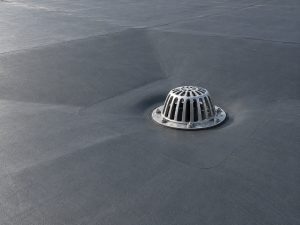
At clamping-ring drains, the membrane connection must follow the approved detail, with suitable components and a clear strainer. Other drainage outlets require their own appropriate flashing details.
With leaves and other debris collecting on roofs, regular drain inspections and cleaning are important. Spring and fall checks provide a useful starting point, with additional attention where debris accumulates more quickly.
Repair or Replace? Start by Finding the Real Leak
A leak doesn’t mean the whole roof is finished. A localized seam or pipe-flashing problem may be repairable when the surrounding assembly remains serviceable. Finding the source matters because water can travel through or beneath the roof assembly before appearing inside.
Replacement deserves consideration when deterioration is widespread, substantial areas of insulation are wet, or membrane movement has affected many perimeter details. The extent and cause of damage should be assessed before deciding.
If your building is in southwest Indiana, our blog on EPDM Roof Repair Evansville, IN provides repair-focused information.
Questions to Ask an EPDM Contractor
- How will you assess existing insulation and investigate suspected moisture?
- Which attachment method do you recommend, and why?
- How will you check completed seams according to the selected system’s requirements?
- What will you do about areas where water pools?
- What does the manufacturer’s warranty cover, and what maintenance does it require?
Talk to Outdo Commercial Roofing About Your Bloomington Roof
Whether you are considering a seam repair or a full replacement, discuss the inspection scope, documentation and repair options with Outdo Commercial Roofing. The assessment should explain the roof’s condition and the practical limits of each option.
If you’re planning EPDM roofing in Bloomington, IN, call Outdo Commercial Roofing at 574-536-2823 to arrange an inspection and discuss EPDM roofing services.
FAQs
How long does an EPDM roof last?
An EPDM roof can provide decades of service. Actual life depends on the roof assembly, installation, exposure, drainage and maintenance. Membrane thickness is one consideration, but it does not determine service life by itself.
What affects the cost of an EPDM roof?
The main factors include roof size, membrane selection, attachment method, insulation, access and the number of penetrations requiring flashing. Removing wet or damaged materials and repairing decking can add to the scope. Tear-off and recover options have different costs and suitability requirements.
Can EPDM go over my existing roof?
Sometimes. The existing assembly must be suitable for the proposed recover, and applicable requirements must be checked. Moisture condition, existing layers, loading and attachment all matter. A moisture survey may help inform the decision, but additional investigation can be needed before suitability is established.
Can EPDM be installed in winter?
Installation may be possible when conditions meet the selected products’ requirements. Adhesives, primers and seam materials have application and storage limits. Cold weather, moisture or unsuitable substrates may delay particular steps.
Will the work shut down my business?
It depends on the work, building use, access and safety arrangements. Phased work may help manage disruption where practical. Agree on weather protection, noise, odors, restricted areas and any equipment shutdowns before work begins.
How often should an EPDM roof be inspected?
Spring and fall inspections are a useful baseline, along with checks after significant storms. Follow the manufacturer’s maintenance requirements and adjust the schedule for roof condition, debris and rooftop activity. Early attention to seam or drainage problems can help limit further damage.