

Commercial gutter problems often begin with a limited defect, such as a leaking joint, loose support, sagging section, or restricted downspout. For a property owner in Evansville, IN, the next step should depend on the condition of the full drainage path rather than the most visible symptom alone. Outdo Commercial Roofing provides commercial gutter services and can be reached at (574) 536-2823 to discuss gutter repairs in Evansville.
Common Signs That Gutter Repairs Are Needed
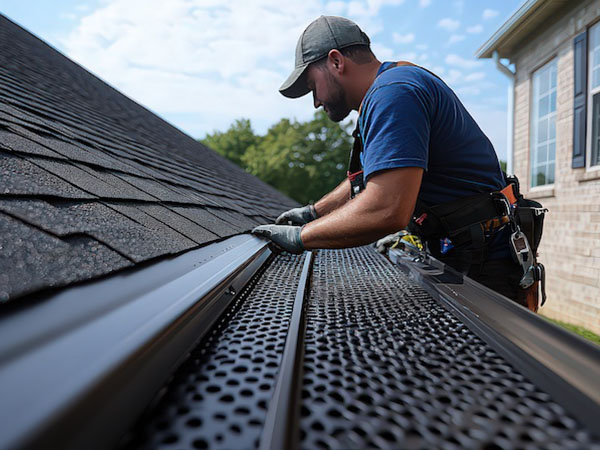
Overflow during rainfall can point to several different problems. Debris may be restricting flow, a downspout may be blocked, the gutter may have lost its intended slope, or the existing system may not be handling runoff effectively. Because these causes call for different work, overflow should be investigated before a repair scope is chosen.
Sagging or pulling away from the building also deserves attention. Loose hangers, weakened attachment points, accumulated debris, or damaged supporting material can allow sections to move out of alignment. Leaks at joints and seams are another common warning sign, especially when water is repeatedly reaching walls, entrances, loading areas, or other building components.
Understanding Common Commercial Gutter Problems
Commercial gutter systems include more than the visible gutter channel. Joints, seams, supports, outlets, downspouts, fascia or other supporting components, and the final discharge location all affect how water moves away from the building.
Temperature changes can contribute to movement at joints and seams over time. Downspouts can also become restricted by leaves, debris, or other material, causing water to back up. If supports loosen or the material behind them has deteriorated, simply sealing a leak may not address the condition that allowed the gutter to move.
Why Regular Inspections Matter
Inspection frequency should reflect the building and its conditions rather than a single schedule for every property. Tree cover, roof area, past overflow, storm exposure, rooftop debris, previous repairs, and maintenance history can all affect how often the drainage system should be checked.
A useful inspection looks for developing problems before they become larger drainage failures. Property managers should ask what was observed, which components are affected, whether the issue appears localized, and whether any conditions remain uncertain. Outdo Commercial Roofing’s maintenance and repair services provide a related point of reference when discussing ongoing roof and drainage concerns.
Repairing Problems Before Replacement Becomes Necessary
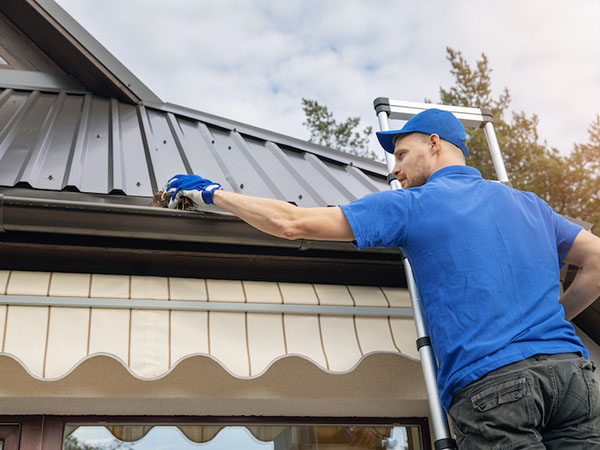
Some gutter problems can be handled with a defined repair when the surrounding system remains serviceable. Examples may include resealing a limited joint, correcting a localized alignment problem, replacing or reinforcing a damaged support, or clearing a restricted outlet as part of maintenance.
Replacement should be evaluated when deterioration is broader, multiple sections are failing, attachment conditions are compromised in several areas, or repeated repairs are no longer providing reliable drainage. The decision should follow the actual extent of damage and the expected serviceability of the remaining system rather than a fixed age or percentage rule.
Drainage and Scope Checklist Before Gutter Repair
Before work begins, the repair scope should account for the full path water takes from the roof edge to the approved discharge point.
- Joints and seams: Identify leaking or separated areas and check nearby connections for related movement.
- Supports and attachment points: Confirm whether hangers, fasteners, fascia, or other supporting material remain suitable for the proposed repair.
- Downspouts and outlets: Check for restrictions, damage, and whether the outlet arrangement is appropriate for the roof area being drained.
- Discharge routing: Confirm where water is released and whether the routing creates avoidable problems near entrances, traffic areas, or the building perimeter.
- Maintenance access: Identify sections that will need safe future access for inspection or debris removal.
This review helps separate three different scopes. Debris removal is maintenance or cleaning, not a structural repair. A limited defect with serviceable surrounding components may support localized repair. Widespread deterioration or repeated failures may justify comparing replacement with continued repair.
Professional Sizing and Closeout Checks
When capacity or repeated overflow is part of the concern, gutter and downspout sizing should be evaluated professionally for the building rather than assumed from appearance. Roof area, runoff concentration, outlet locations, slope, and the existing drainage arrangement can all affect performance.
After repairs are completed, closeout should confirm that the agreed work was performed and that the repaired area drains as intended. Depending on the project, that may include checking alignment toward outlets, reviewing connections and supports, and using an appropriate flow check to observe how water moves through the repaired section. Closeout should also document any remaining conditions that need monitoring or separate work.
Protect Your Drainage System with Timely Repairs
Commercial gutters help move water away from the building, but the right response depends on what is actually failing. For an Evansville property, documenting the condition of joints, supports, downspouts, supporting material, discharge routing, and access can make it easier to choose between maintenance, localized repair, and broader replacement.
Contact Outdo Commercial Roofing at (574) 536-2823 to discuss a commercial gutter repair assessment in Evansville, IN.
Frequently Asked Questions
How do I know whether commercial gutters need repair or replacement?
A localized defect may be repairable when nearby components remain serviceable. Broader deterioration, repeated failures, or compromised supports may justify comparing replacement with continued repair.
Does gutter overflow always mean the gutters are too small?
No. Overflow can also result from blocked outlets, poor alignment, damaged sections, concentrated runoff, or other drainage conditions that should be identified before changing system size.
What should be checked after a gutter repair is completed?
Closeout should confirm the agreed repair, alignment toward outlets, secure connections and supports, and appropriate water flow through the repaired area, with remaining concerns documented.