
A flat roof can start leaking at one weak seam, one loose pipe boot, or one low spot where water sits for days. That is why the way an EPDM roof is built matters as much as the rubber itself.
Outdo Commercial Roofing provides EPDM roofing in Jeffersonville, IN. Whether you’re comparing EPDM roofing in Evansville, IN, or planning a project in Jeffersonville, this guide covers the details to look for: the membrane, the seams, how the roof is held down, how pipes and rooftop units are sealed, and how water leaves the roof. Have a question about your roof? Call 574-536-2823.
Why EPDM Is Common on Flat Roofs Here
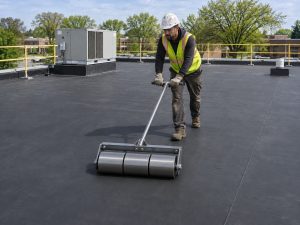
EPDM is a synthetic rubber membrane used on low-slope commercial roofs. Jeffersonville buildings face hot summers, heavy storms along the Ohio River, and winter freeze-thaw cycles. The roof needs to handle changes in temperature and drain well after storms.
The Material vs. the Install
A long service-life claim about EPDM doesn’t tell you how long your particular roof will last. Installation and maintenance also matter.
Look at how the seams are prepared, how the sheet is held down, how each pipe and unit is sealed, and whether water drains off. Open seams, damaged flashing, and recurring standing water can all contribute to leaks. The rest of this guide walks through each detail so you know what to ask when you compare quotes.
Step 1: Choosing the EPDM Membrane
EPDM is available in thicknesses such as 60 and 90 mil. The right choice depends on the approved roof assembly, expected rooftop traffic, and hail exposure. If technicians regularly service rooftop equipment, ask whether the system also calls for walkway pads along their route.
- Reinforced or non-reinforced: Reinforced EPDM has a fabric layer that helps resist tearing. It is used in some mechanically attached assemblies. Non-reinforced membranes are common in fully adhered systems. The manufacturer’s approved assembly determines which sheet to use.
- Black or white: White EPDM reflects more sunlight than black EPDM. Whether that makes a meaningful difference in cooling costs depends on the insulation, climate, and how the building is used.
Step 2: Seams, Where Most Problems Start
EPDM comes in large rolls, but most roofs still need seams where two sheets meet. Taped seams rely on careful preparation and even pressure. A typical installation follows these steps:
- Clean the overlapping sheet edges as directed by the manufacturer.
- Apply compatible primer and allow it to flash off as instructed.
- Set the seam tape and bring the overlapping sheet into contact with it.
- Roll the seam firmly so the tape makes even contact.
- Reinforce T-joints, where three sheet edges meet, as required by the system.
Contamination, rushed primer application, or uneven rolling can weaken the bond and let the seam open early.
Step 3: How the Roof Is Attached
Three common ways to hold an EPDM roof down are full adhesion, mechanical attachment, and ballast. Each suits different building conditions.
Fully Adhered
The membrane is bonded to the insulation or cover board below it. The surface needs to be clean and dry, and the adhesive must be applied within the manufacturer’s temperature range and at the specified rate. Wind performance depends on the approved assembly and how the edges are secured.
Mechanically Attached
Fasteners and plates secure the membrane. In systems fastened along the seams, the overlapping sheet covers the fasteners. The fastening pattern follows the approved assembly and wind design. Roof edges and corners may need closer spacing because wind uplift is stronger there.
Ballasted
The membrane is laid loose and held in place by stone or pavers. The building structure must be able to carry the added weight.
The choice depends on the roof deck, building height, wind exposure, and the manufacturer’s approved assembly. An attachment method that works on one building may not suit another.
Step 4: Penetrations and Flashing
Pipes, vents, drains, skylights, and rooftop units interrupt the roof surface. Each needs a detail that keeps water from getting beneath the membrane.
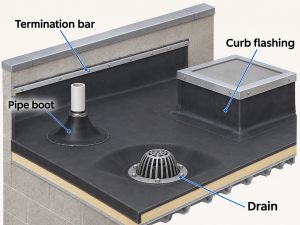
- Pipe boots: Pre-molded boots fit standard round pipes with enough room around them.
- Field-fabricated flashing: Uncured EPDM can be shaped around clustered pipes or irregular penetrations when a standard boot won’t fit.
- Curbs: Flashing runs up the raised frames around HVAC units and skylights and is secured at the top.
- Pitch pockets: These can hold compatible sealant around irregular supports when the roof system allows that detail.
- Walls and edges: Flashing is secured according to the system detail. A termination bar may hold the top of wall flashing in place.
If flashing is pulling loose around a unit or pipe, have it checked before water spreads beneath the membrane. The same warning signs apply if you’re looking for EPDM roof repair in Evansville, IN. See our commercial roof maintenance and repair services.
Step 5: Drainage, Getting Water Off the Roof
Even a flat roof needs enough slope to move water toward drains or scuppers. Substantial water still on the roof about 48 hours after rain is a warning sign. Check the drainage requirements for your specific roof system and warranty.
A drainage assessment can include:
- Checking the existing roof slope
- Marking areas where water repeatedly collects
- Checking drain heights, strainers, and clamping rings where applicable
- Reviewing whether scuppers and gutters can handle the runoff
The fix depends on the cause. Tapered insulation can build slope into a roof assembly. Crickets, or small sloped sections, can direct water around walls and rooftop units toward drains.
Get a Straight Answer About Your Roof
Outdo Commercial Roofing provides EPDM and other single-ply roofing options for commercial buildings. If you’re planning EPDM roofing in Jeffersonville, IN, ask which seam, flashing, and drainage checks apply to your roof and what documentation is included with the inspection.
Call 574-536-2823 or contact Outdo Commercial Roofing to schedule a roof inspection.
Frequently Asked Questions
How long does an EPDM roof last in Jeffersonville, IN?
Service life depends on the membrane, installation, weather exposure, drainage, and maintenance. Well-bonded seams, secure attachment, and sound flashing help keep water out. Regular inspections help identify problems before they spread.
What thickness of EPDM should I choose for my commercial building?
Compare 60- and 90-mil options within approved roof assemblies. Consider roof access, equipment service traffic, hail exposure, and what each assembly is rated for. Thickness is one part of the decision.
Is a fully adhered EPDM roof better than a mechanically attached one?
Neither is better for every building. Fully adhered systems depend on a sound bonding surface and correct adhesive application. Mechanically attached systems depend on suitable fasteners and the right fastening pattern. Compare assemblies that meet your building’s wind and deck requirements.
Why do EPDM roof seams fail?
Poor cleaning, incorrect primer application, and uneven rolling can all weaken taped seams. Use compatible materials and follow the manufacturer’s instructions for preparing and joining the sheets.
Can EPDM be installed over my existing roof?
Sometimes. A roofer needs to assess the existing roof and deck, check for trapped moisture, and confirm whether local code and the proposed roof system allow a recover. Wet insulation and damaged materials need to be addressed first.
How do I know if my EPDM roof has drainage problems?
Look for substantial water that remains about 48 hours after rain, or for dirt rings and algae where water repeatedly collects. A roofer can determine whether the cause is a blocked drain, a low spot, or a drainage layout that needs to change.