
One lifted seam can let water slip under a flat roof and soak the insulation below. The roof may look fine on top even as moisture spreads. By the time a ceiling stain shows up, the affected area can be much larger than the opening where water got in.
Commercial roof inspections in Bloomington, IN, can help identify visible defects before they cause more damage. Whether you’re planning a visit in Bloomington or comparing commercial roof inspections in Evansville, IN, this guide explains what an inspection can show, when testing may help, and how to use the findings. Call Outdo Commercial Roofing at 574-536-2823 to set up a visit.

What Bloomington Weather Does to Low-Slope Roofs
Bloomington winters often swing above and below freezing. Water that gets into small cracks can freeze and expand, putting more stress on already worn areas.
Fall brings another problem. Leaves from trees along Bloomington streets and campuses can collect on rooftops and block drains. When water has nowhere to go, it can collect around seams, walls, and equipment curbs.
On older buildings with limestone parapet caps, check the joints between the stones. Cracked or missing sealant can leave a path for water above the roof flashing.
How a Commercial Roof Inspection Works
The scope depends on the roof material, the reason for the visit, and which areas are accessible. The details vary across TPO, EPDM, PVC, modified bitumen, built-up, and metal roofs. An inspection can include:
- Roof surface: Review accessible sections, including areas away from a reported leak.
- Seams: Look for gaps or lifted edges. A trained inspector may probe compatible welded seams where appropriate.
- Fasteners: Look for loose screws, corrosion, or fasteners pushing up beneath the membrane.
- Edges, openings, and drainage: Check flashing, edge metal, coping, drains, scuppers, pipes, vents, and HVAC curbs.
- Interior clues: Check accessible ceilings for stains or drips when interior access is part of the visit.
- Photo documentation: If included, pair overview photos and close-ups with enough location detail to find each issue again.
What an Inspector Can See and How to Spot It
These are common signs an inspector may find on the roof surface:
- Signs of standing water: Dirt rings, dried water lines, or algae in low spots can show where water collects.
- Blisters: Raised bubbles or lifted areas in the roof surface. A blister alone doesn’t tell you whether the insulation is wet.
- Lifted seams: A gap or separated edge where two roof sheets overlap.
- Loose flashing: Flashing pulling away from a wall or curb, or gaps at corners.
- Failed sealant: Cracks or gaps where sealant has shrunk or pulled away from metal, pipes, or limestone joints.
- Drain problems: Leaves or dirt blocking an outlet, or a missing strainer that leaves the drain exposed to debris.
- Punctures: Small cuts or holes, often near rooftop equipment and service paths.
- Backed-out fasteners: Raised spots under a membrane or loose screws on metal panels.
- Corrosion: Rust stains or flaking around fasteners and edges.
- Possible storm damage: Dents in vents or caps and marks on the membrane. These observations can guide further assessment, but don’t establish the condition of the layers underneath.
A single visit shows where water is sitting at that moment. If substantial water remains about 48 hours after rain, have the drainage checked against the requirements for your roof system. Dated observations after storms can help show whether a problem keeps recurring.
When a Problem Needs a Test, Not Just a Look
A roof surface can look sound while the layers below hold water. If the findings point to a hidden problem, a separate test may help. Confirm what the test can establish before it’s scheduled.
- Infrared scan: A thermal camera detects temperature patterns that can point to trapped moisture. Weather, surface conditions, and the roof assembly affect the results. A warm area alone doesn’t confirm wet insulation.
- Core samples: Small samples can reveal the roof layers and help confirm moisture at the sampled locations. The openings need to be repaired afterward. Check any manufacturer warranty requirements before sampling.
- Electronic leak detection: This can help locate membrane breaches on compatible roof assemblies. Common methods require an electrically insulating membrane with a suitable conductive layer beneath it.
- Water testing: A controlled water test may help isolate a leak when the roof and site are suitable. Flood testing is a separate procedure that adds weight and requires an assessment of whether the structure and drainage can accommodate it.
Who Sets Up Roof Access
Before the visit, agree on who will provide roof access, meet the inspector, and notify tenants if needed. If the inspection requires access above a ceiling or inside a locked room, arrange that with the property manager or tenant ahead of time.
Inside Your Inspection Report
A useful report explains where each issue is, why it matters, and what to do next. Location notes, a roof sketch, and dated photos can help you find the same spot later. An overall condition summary can describe whether the roof shows minor wear, needs localized repairs, or warrants a broader assessment.
Repair priorities can be grouped this way:
- Fix now: Address active leaks or openings that let water in.
- Fix soon: Plan repairs for defects that could worsen before the next season.
- Watch: Record conditions that don’t need immediate repair and recheck them at the next inspection.
Visual observations and test results should be clearly identified. If testing wasn’t done, the findings should make that limit clear. If you need a budget figure, confirm whether it’s part of the report or requires a separate quote once the repair scope is known.
Repair, Coat, or Replace: Using Your Report
Small, localized defects can often be repaired when the rest of the roof is sound. Widespread wet insulation or deterioration may call for a larger repair or replacement.
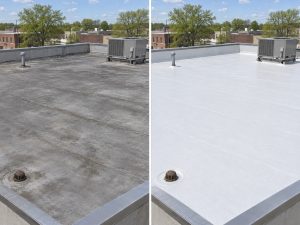
A coating may be an option when the roof is sound and compatible with the proposed system. Wet insulation and damaged areas need to be addressed first. Where there’s reason to suspect hidden moisture, testing can help define that work. A reflective coating can lower roof surface temperatures, though the effect on cooling depends on the building. Learn more about the advantages of commercial roof coating before you choose.
What to Confirm Before Booking
When arranging an inspection with Outdo, confirm which roof and interior areas the visit covers. Ask whether the report includes labeled photos, a roof map or location notes, and repair priorities. If testing or cost estimates are needed, confirm whether they’re included or arranged separately.
Schedule Your Bloomington Roof Inspection
Inspection findings can help you prioritize repairs, build next year’s budget, and keep a dated record of the roof’s condition. Call Outdo Commercial Roofing at 574-536-2823 or contact us online to schedule a commercial roof inspection in Bloomington, IN.
Frequently Asked Questions
How often should a commercial roof be inspected?
Spring and fall are good starting points, with another check after a major storm. Follow any inspection schedule specified in your roof warranty.
Can one visit tell if water sits on my roof too long?
A visit captures conditions at that moment. Dirt rings and water lines show where water has collected, but they don’t tell you how long it stayed. Dated observations after rain or a follow-up visit can help establish whether water keeps collecting or takes too long to drain.
Will my report include photos and a roof map?
Confirm what’s included when you schedule. Labeled photos and a map, sketch, or location notes make it easier to find defects and compare their condition later.
Can a visual inspection find wet insulation?
Not reliably. Wet insulation can sit under a roof that looks sound. Infrared scans and moisture meters can help identify suspect areas, and core samples can confirm conditions at the locations sampled.
Can an inspection report help with an insurance claim?
A dated report with photos can document visible roof conditions at the time of the visit. You can share it with your insurer, which may ask for additional information.
What happens if my roof needs work?
Use the findings to identify what needs prompt attention, what can be scheduled, and what should be monitored. If you need pricing, ask for a quote once the repair scope is clear.