

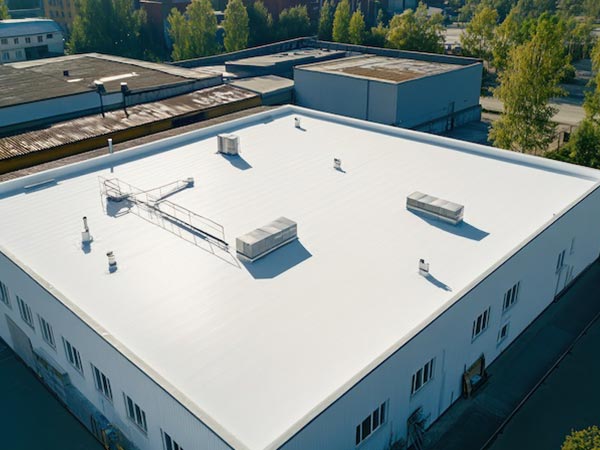
Commercial property owners in Evansville, IN, need roofing systems that provide dependable waterproofing, energy efficiency, and long-term performance. Thermoplastic polyolefin, commonly known as TPO, has become one of the most popular choices for low-slope commercial buildings because it offers durability and heat-reflective properties. Understanding how a TPO roof installation works allows building owners to evaluate the quality of the work and make informed decisions throughout the project.
TPO roof installation involves several carefully planned steps that work together to create a durable, weather-resistant roofing system. Call Outdo Commercial Roofing at (574) 536-2823 for TPO roof installation in Evansville, IN.
Preparing the Roof for TPO Installation
Every successful roofing project begins with a thorough assessment of the existing roof structure. Contractors inspect the roof deck to verify that it remains structurally sound and capable of supporting the new roofing system. Any damaged decking or deteriorated materials must be repaired before installation begins.
Once the roof deck has been evaluated, the surface is cleaned and prepared for the next stage of construction. Proper preparation creates a stable foundation for the insulation and membrane while reducing the likelihood of future performance issues.
Insulation boards are then installed across the roof surface. These boards improve energy efficiency, provide a smooth substrate for the membrane, and help create consistent support across the entire roofing system. Proper fastening and alignment of the insulation are essential for maintaining long-term roof performance.
Installing the TPO Membrane
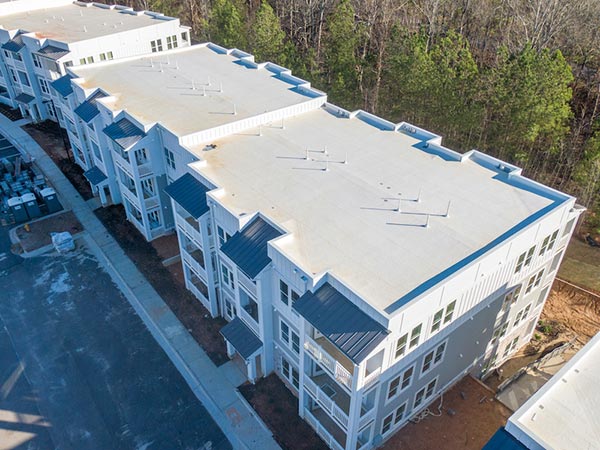
After the insulation is secured, large sheets of TPO membrane are carefully positioned across the roof. Contractors allow the material to relax before final attachment so it can settle naturally, helping minimize unnecessary stress within the membrane.
The membrane is then mechanically fastened or adhered according to the roof’s design requirements. Each sheet must be properly aligned to maintain straight seams and consistent overlap throughout the project.
One of the defining characteristics of TPO roofing is its heat-welded seams. Specialized hot air welding equipment fuses adjacent membrane sheets together, creating continuous waterproof joints that often become as strong as the surrounding membrane itself. Proper seam welding is one of the most important factors affecting the roof’s long-term reliability.
Flashing Details Protect Vulnerable Areas
Flat roofs include numerous transitions where maintaining waterproof protection becomes more complex. Pipes, HVAC equipment, roof curbs, drains, parapet walls, and other penetrations require specially fabricated flashing materials that integrate with the primary membrane.
These flashing details create watertight transitions at changes in the roof surface, where leaks can develop if installation quality is poor. Every penetration must be carefully sealed using compatible materials and proper welding techniques.
Edge details also require careful attention during installation. Secure termination at roof perimeters helps resist wind uplift while maintaining continuous waterproof protection around the building. These finishing details play an important role in how well the roofing system performs through years of changing weather conditions.
What Sets a Quality Installation Apart
Although TPO roofing materials are manufactured to high standards, installation quality plays a critical role in how well the completed roof performs. Careful preparation, accurate membrane placement, consistent seam welding, and properly installed flashing all contribute to a roofing system that resists leaks and weather-related damage.
Professional installers also perform inspections throughout the project to verify seam integrity, fastening patterns, flashing quality, and overall workmanship before the roof is considered complete. Addressing minor issues during installation helps prevent larger maintenance concerns after the project is complete.
For building owners, understanding each stage of the installation process provides greater insight into whether the finished roofing system has been installed according to industry standards and is prepared to deliver reliable service for many years.
Invest in Professional TPO Roof Installation
A properly installed TPO roof combines quality materials with careful workmanship at every stage of construction. From preparing the roof deck to welding seams and completing flashing details, every step contributes to the system’s long-term performance and weather resistance.
For TPO roof installation in Evansville, IN, contact Outdo Commercial Roofing at (574) 536-2823 today.
FAQ
How long does a TPO roof installation take on a typical commercial building?
Installation time depends on the building’s size, roof complexity, weather conditions, and whether repairs to the existing roof deck are needed. Many projects take several days, while larger facilities may require additional time.
Can a TPO roof be installed over an existing roof?
In some situations, a TPO roof can be installed over an existing roofing system if local building codes allow it and the existing roof is structurally sound. A professional inspection determines whether a recover or complete tear-off is the better option.
What should I look for after a TPO roof installation is complete?
Building owners should expect straight membrane placement, securely welded seams, properly sealed flashing around penetrations, clean drainage areas, and consistent workmanship across the entire roof surface.