
PVC roofing can be a strong commercial single-ply option, but the membrane should be chosen for the building rather than for headline benefits alone. Substrate condition, drainage, attachment, insulation, rooftop activity, detailing, chemical exposure, and future service access all affect whether PVC is a good fit. Outdo Commercial Roofing serves commercial properties in Southern Indiana and can be reached at (574) 536-2823 to discuss the roof and project requirements.
How to Assess PVC Roofing for a Commercial Building
A useful PVC recommendation should explain why the system fits the existing or planned roof assembly. The contractor should separate confirmed conditions from unknowns and identify what still needs investigation before the final scope is set.
| Factor | What to Confirm | Why It Matters |
|---|---|---|
| Substrate and moisture | Deck condition, existing roof condition, suspected wet insulation, and areas needing repair | A new membrane does not correct concealed deterioration or saturated materials by itself. |
| Drainage | Drains, scuppers, low areas, slope, and recurring ponding | PVC should not be expected to solve a drainage defect that remains underneath the new system. |
| Attachment | Deck type, building height, perimeter conditions, exposure, and proposed attachment method | The assembly has to match the building and project-specific design requirements. |
| Insulation | Existing insulation condition and proposed insulation or cover-board scope | Thermal performance depends on the full roof assembly, not the membrane alone. |
| Rooftop activity | Equipment, foot traffic, service routes, grease, oils, or process-related exposure | Traffic and exposure can affect membrane protection, compatibility, and detailing needs. |
| Service access | How future repairs and equipment work can be performed without damaging the roof | Later rooftop work can affect seams, flashing, penetrations, and membrane condition. |
Substrate Condition and Drainage Come First
PVC performs best as part of a sound roof assembly. If the deck is deteriorated, insulation is wet, or drainage problems remain unresolved, those conditions should be addressed or clearly accounted for before a membrane system is selected.
The evaluation method should match the roof and the suspected condition. A proposal should explain what is known about the substrate, what remains uncertain, and how concealed moisture or damage will be investigated if it could change the scope.
Attachment and Insulation Are Project Specific
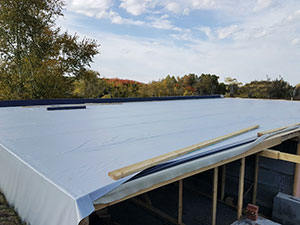
PVC systems may be mechanically attached, fully adhered, or installed in another approved assembly depending on the building and project. The contractor should explain why the proposed attachment method fits the deck, roof geometry, exposure, perimeter conditions, and other design requirements.
Insulation should be evaluated separately from the membrane. A reflective PVC surface may reduce solar heat gain compared with a darker roof, but building-level energy effects depend on insulation, HVAC operation, roof area, climate, and building use. PVC should not be presented as guaranteeing a specific utility savings percentage or payback period.
Rooftop Activity and Chemical Exposure Matter
Buildings with frequent rooftop service, equipment access, grease, oils, or process-related chemicals may have different membrane needs than a lightly trafficked roof. PVC can be worth evaluating in those conditions, but compatibility should be checked against the actual substances and exposure pattern rather than assumed from a broad chemical-resistance claim.
High-traffic routes and equipment areas may also need added protection or specific detailing. The proposal should explain how service paths, curbs, penetrations, and equipment interfaces will be handled.
Seams, Flashing, and Repair Compatibility Need Attention
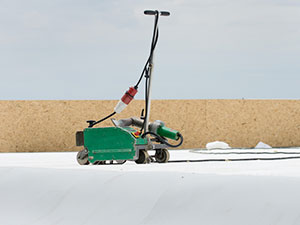
PVC seams are commonly joined with hot-air welding. A properly formed weld can create a durable seam, but welded construction does not make the roof maintenance-free or immune to leaks. Seam performance still depends on preparation, installation quality, roof movement, later rooftop work, flashing, and aging.
Future repairs should use materials and methods compatible with the installed PVC system. Ask whether the contractor can service the proposed system, how repairs will be documented, and how penetrations, edges, transitions, and previous repair areas will be handled.
When PVC May Not Be the Best Fit
PVC is not automatically the most reliable choice for every commercial building. A compromised substrate, extensive wet insulation, unresolved drainage problems, incompatible existing materials, unusual attachment constraints, or project requirements better served by another system can change the recommendation.
The strongest proposal should compare PVC with the realistic alternatives for the building and explain the trade-offs. That keeps system selection separate from the broader installation and maintenance guidance covered elsewhere on the site.
PVC Roofing for Southern Indiana Commercial Properties
Outdo Commercial Roofing’s verified commercial scope includes PVC, TPO, and EPDM single-ply installation along with general commercial roofing services. For a Southern Indiana property, the PVC decision should follow the building’s actual substrate, drainage, attachment needs, insulation, rooftop activity, detailing, and service requirements. Contact Outdo Commercial Roofing at (574) 536-2823 to discuss whether PVC is a suitable option for the roof.
Frequently Asked Questions
Is PVC roofing the most reliable choice for every commercial building?
No. PVC can be a strong option, but substrate condition, drainage, attachment, insulation, rooftop activity, exposure, and detailing all affect whether it is the right fit.
Does PVC roofing guarantee lower energy costs?
No. Reflectivity can affect roof heat gain, but actual energy use depends on the complete roof assembly, insulation, HVAC operation, building use, roof area, and climate.
Can any repair material be used on a PVC roof?
No. Repairs should use materials and methods compatible with the installed PVC system, and the contractor should confirm how future repair work will be handled.
What should a contractor confirm before recommending PVC?
The proposal should address substrate condition, moisture, drainage, attachment, insulation, rooftop activity, exposure, detailing, service access, and any conditions that could change the scope.